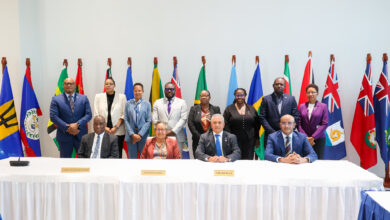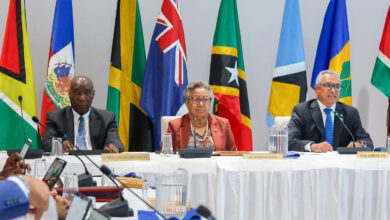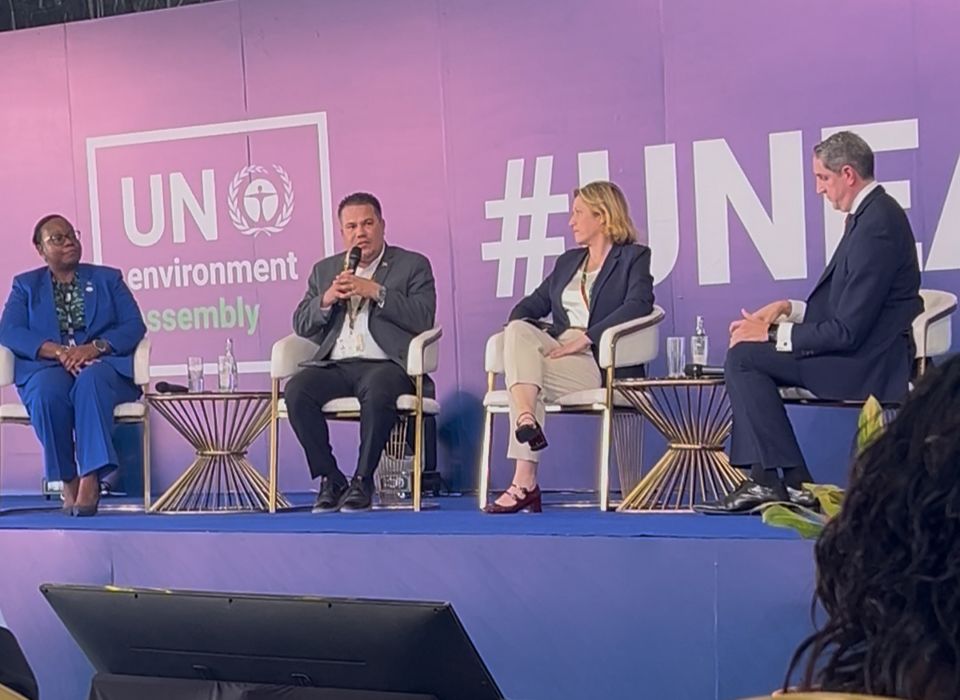
Caribbean Community (CARICOM) Member States at the High-Level Segment of the Seventh Session of the United Nations Environment Assembly (UNEA-7) in Kenya, made compelling interventions highlighting the urgency of action, the unique vulnerabilities of Small Island Developing States (SIDS), and the need for equitable global partnerships.
The UNEA-7, held under the theme ‘Advancing Sustainable Solutions for a Resilient Planet,’ brought together global leaders to address the triple planetary crisis of climate change, biodiversity loss, and pollution. The high-level segment was held 11-12 December 2025.
National Statements were delivered by the Hon. Adrian Forde, Minister of Environment and National Beautification, Green and Blue Economy, Barbados; Hon. Patrick Brunings, Ministry of Oil, Gas and Environment, Suriname; Hon. Dr. Joyelle Clarke, Minister of Sustainable Development, Environment and Climate Action and Constituency Empowerment, St. Kitts and Nevis; Hon. Matthew Samuda, Minister of Water, Environment and Climate Change, Jamaica; and the Hon. Cozier Frederick, Minister of Environment, Rural Modernisation, Kalinago Upliftment and Constituency Empowerment, Dominica. Antigua and Barbuda, Haiti, Grenada and Saint Lucia were represented at the Ambassadorial and technical levels.
Barbados: Confronting Climate and Financial Vulnerability
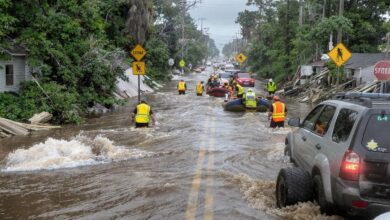
Barbados emphasised the existential threat posed by intensifying climate impacts, citing recent hurricanes such as Melissa and Beryl as stark reminders of the Region’s fragility. These disasters strain national budgets and reverse development gains, forcing SIDS to navigate the impossible choice between economic progress and environmental resilience. To address these challenges, Barbados introduced a Resilience and Sustainability Levy and championed the Bridgetown Initiative, calling for reform of the international financial architecture. The current system imposes borrowing costs of up to 14 per cent on SIDS compared to three–four per cent for developed nations, a disparity that undermines climate adaptation efforts.
Barbados also highlighted the sargassum crisis, which threatens fisheries, tourism, and public health, and called for stronger international cooperation on this issue. Additionally, the country reaffirmed its commitment to combating antimicrobial resistance and advancing negotiations for a legally binding instrument to end plastic pollution.
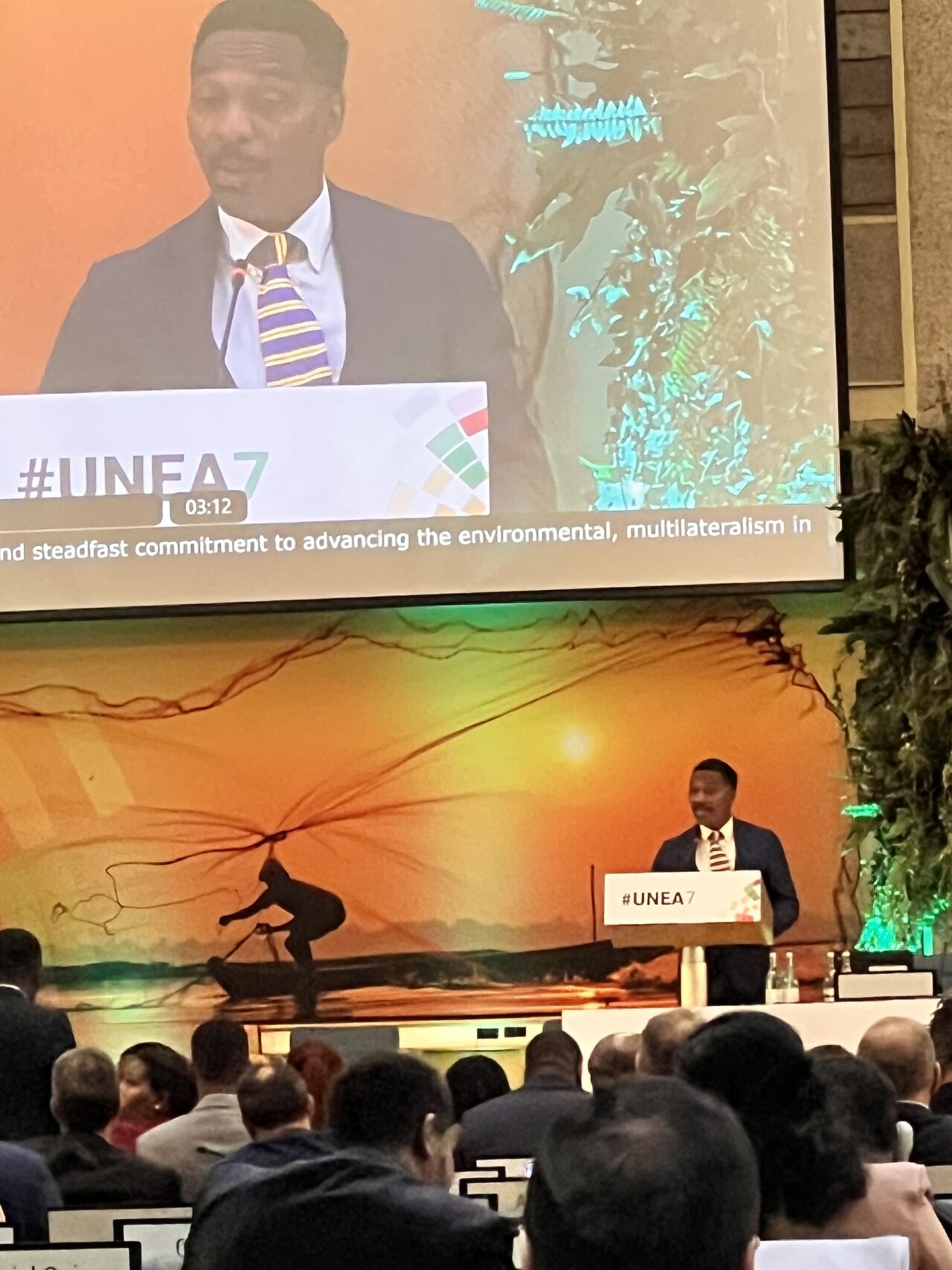
Suriname: Leadership in Carbon Negativity and Waste Management
Suriname’s statement reflected pride in its status as one of the world’s few carbon-negative nations, with 93 per cent forest coverage. However, the country acknowledged significant challenges, particularly in waste management, where open dumping and methane emissions persist.
Plastic pollution remains a critical threat to Caribbean ecosystems, prompting Suriname to advocate for an ambitious global treaty addressing plastics across their entire lifecycle. Nationally, Suriname is implementing measures such as phased reductions of single-use plastics, extended producer responsibility schemes, and enhanced regulatory frameworks for chemicals and waste. While substantial, these efforts require sustained technical and financial support.
Suriname also stressed the importance of regional cooperation through mechanisms like the Caribbean Regional Seas Programme and the Cartagena Convention, alongside scaling nature-based solutions for coastal resilience.
St. Kitts and Nevis: From Policy to Delivery
St. Kitts and Nevis framed resilience as a shift from policy to implementation, guided by its National Development Planning Framework and a vision to become a sustainable island state by 2040. Recent legislative milestones — the National Conservation and Environmental Management Act and the Plastic Waste Reduction Act (2025) demonstrate the country’s commitment to environmental governance and circular economy principles.
The nation’s priorities include strengthening water resource management through nature-positive solutions, enhancing disaster and coastal risk reduction, and linking these efforts to a One Health agenda.
St. Kitts and Nevis called for accessible, predictable, and vulnerability-aligned financing, technology transfer, and capacity-building, stressing that multilateral trust and global solidarity are essential for SIDS to achieve resilience.
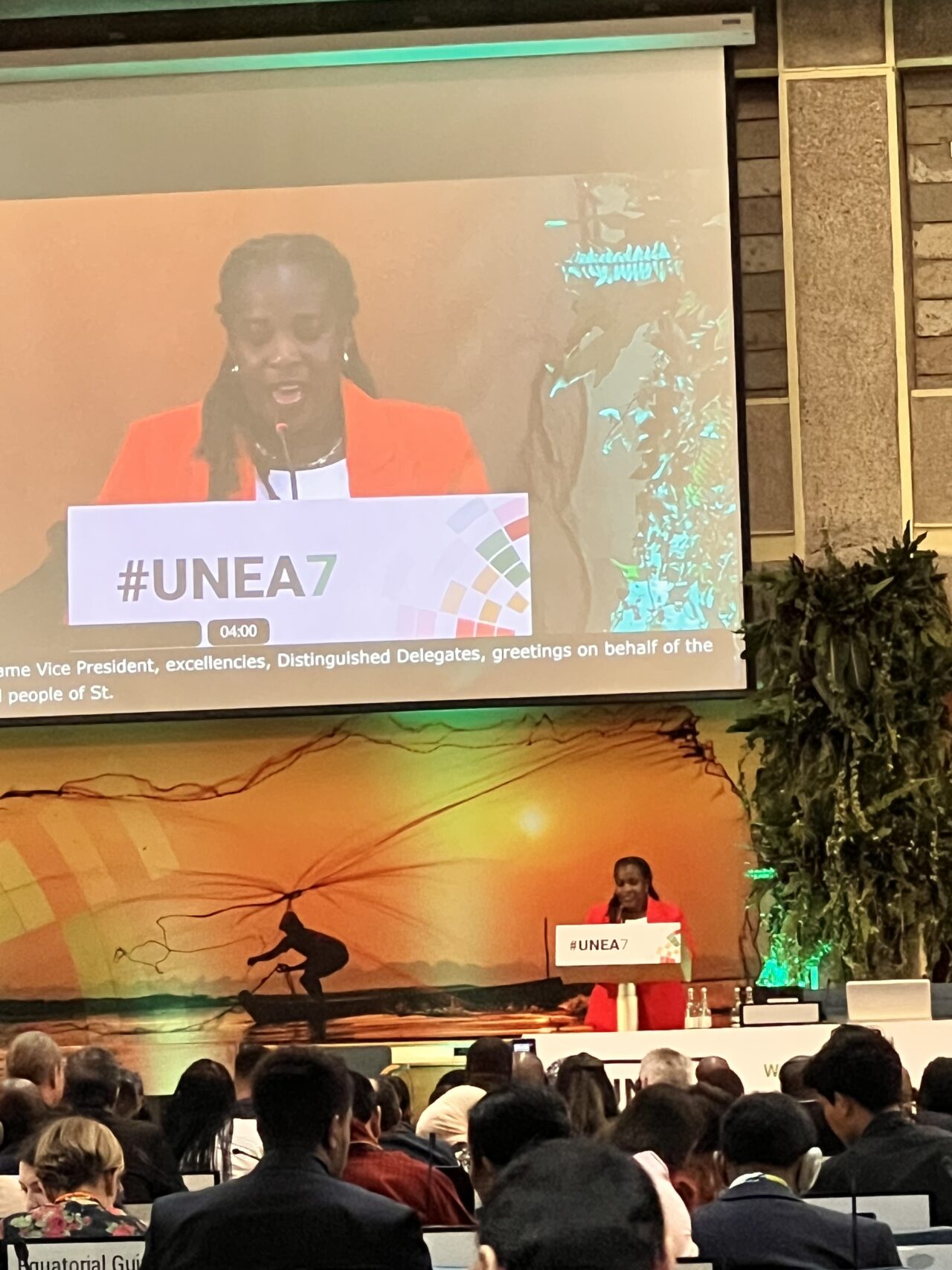
Jamaica: Building Resilience Amid Repeated Climate Shocks
Jamaica’s statement was a stark reminder of the escalating costs of climate disasters. The country reported US$8.8 billion in damage from Hurricane Melissa, equivalent to 41 per cent of its GDP, and severe destruction of 51 per cent of its primary forests. Over the past four years, Jamaica has endured multiple hurricanes; record-breaking heat and rainfall; and severe droughts, leading to soil degradation, reduced pollination, and saltwater intrusion.
Despite these setbacks, Jamaica remains committed to global climate goals. Recent actions include ratifying the Agreement on Marine Biological Diversity of Areas Beyond National Jurisdiction (BBNJ Agreement), updating its Nationally Determined Contributions (NDCs), submitting a Long-Term Strategy for Carbon Emission Reduction, expanding protected areas to 25 per cent terrestrial and 15 per cent marine, and introducing new bans on single-use plastics.
Jamaica strongly supports UNEA-7 resolutions on strengthening UNEP’s role, addressing sargassum influxes, and accelerating coral reef resilience.
Dominica: Pioneering Climate Resilience
Dominica positioned resilience as an existential imperative, recalling the devastation of Hurricane Maria in 2017, which caused losses exceeding 200 per cent of GDP. In response, Dominica has committed to becoming the world’s first climate-resilient nation, integrating sustainability into every facet of development. Key initiatives include geothermal energy investments to reduce fossil fuel dependence, climate-resilient housing, modernised early warning systems, and strengthened disaster preparedness.
Nature-based solutions remain central to Dominica’s strategy: over 60 per cent of its land is forested, and more than 20 per cent is protected as parks and reserves. The country has pledged to plant one million trees to restore degraded lands and safeguard watersheds.
Dominica also highlighted the role of the Kalinago indigenous community, whose traditional knowledge informs modern resilience strategies. The nation called for accessible and simplified climate finance to support energy transition, infrastructure resilience, and community development.
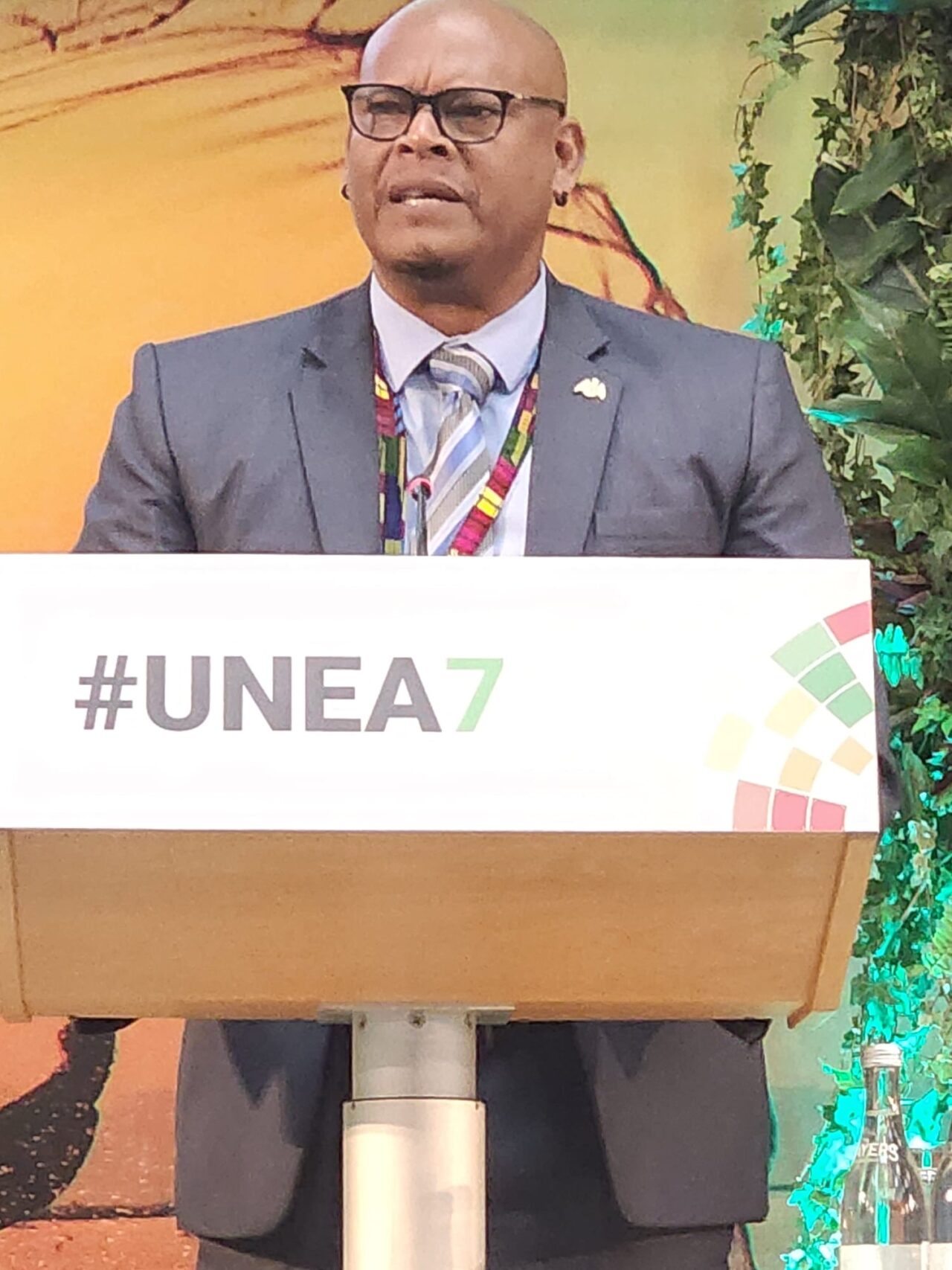
Championing Climate Resilience: Caribbean Nations Lead the Way Toward a Sustainable Future
Across these statements, common themes emerge: the urgent need for climate adaptation, the imperative of reforming global financial systems, and the demand for ambitious, legally binding agreements on plastic pollution. CARICOM Member States are not passive actors; they are leading by example — through innovative policies, legislative reforms, and integrated approaches to sustainability. Yet, their success hinges on fair access to resources, technology, and partnerships that recognise the disproportionate risks they face.
As UNEA-7 concludes, the voices of Barbados, Suriname, St. Kitts and Nevis, Jamaica, and Dominica remind the global community that resilience is not a slogan but a necessity — and that advancing sustainable solutions requires both ambition and equity.