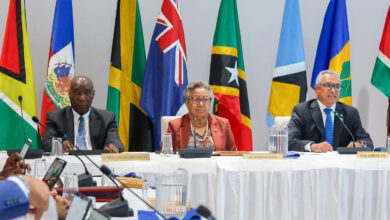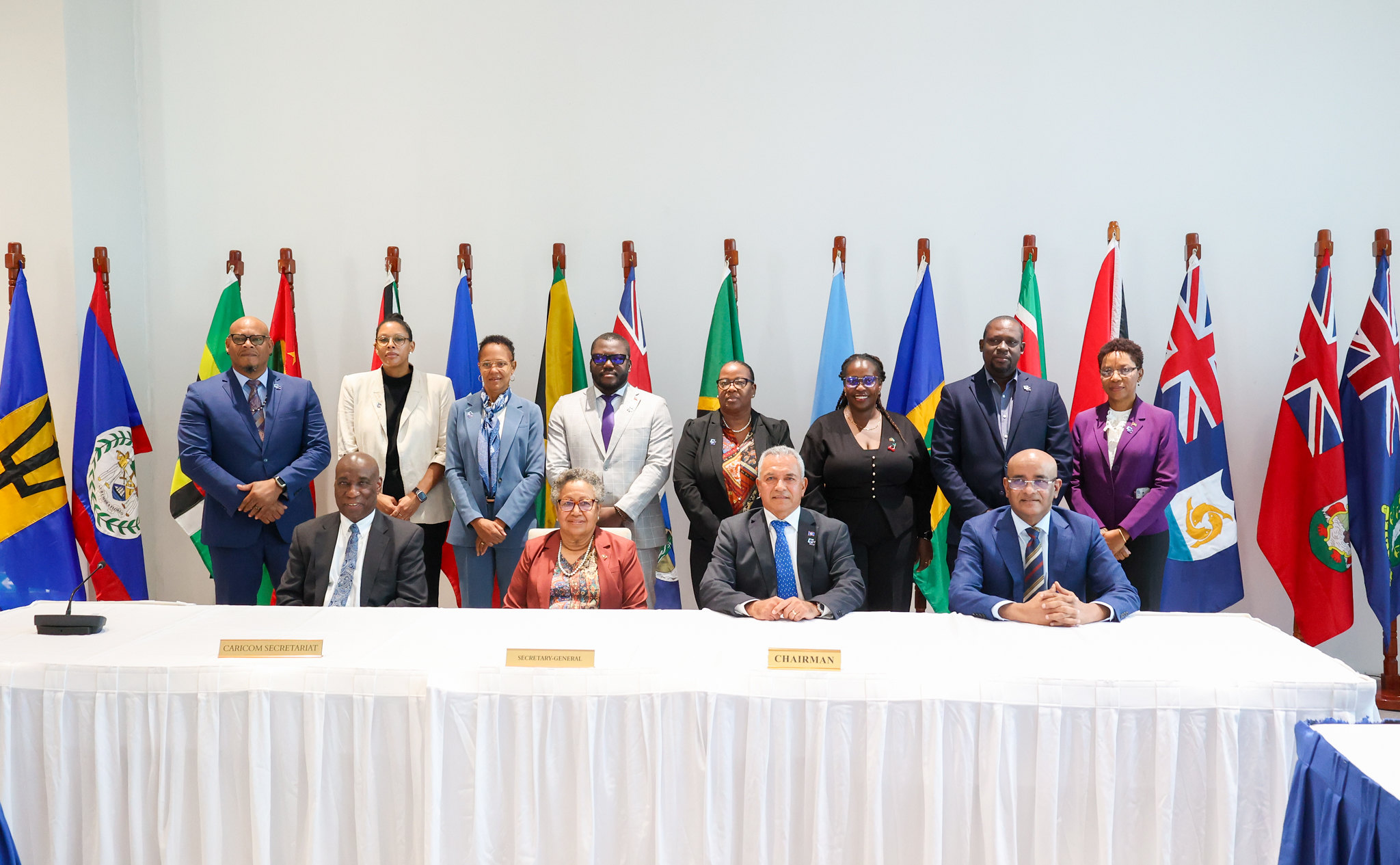
The One Hundred and Twenty-Fourth Special Meeting of the Council for Trade and Economic Development (COTED) – Environment and Sustainable Development convened in Georgetown, Guyana, from 26-27 March 2026. The meeting was chaired by the Honourable Orlando Habet, Minister of Sustainable Development, Climate Change and Solid Waste Management of Belize.
The COTED was attended by the Honourable Santia Bradshaw, Deputy Prime Minister and Minister of Ministry of Environment, National Beautification and Fisheries of Barbados; the Honourable Cozier Frederick, Minister of Environment, Rural Modernisation, Kalinago Upliftment and Constituency Empowerment of the Commonwealth of Dominica; the Honourable Vanessa Benn, Minister within the Ministry of Housing of the Cooperative Republic of Guyana, The Honourable Valery Fils-Aime, Minister of Environment of the Republic of Haiti; the Honourable Matthew Samuda, Minister of Water, Environment, and Climate Change of Jamaica; Senator the Honourable Dr. Joyelle Clarke, Minister of Sustainable Development, Environment, Climate Action and Constituency Empowerment of the Federation of St. Kitts and Nevis; and the Honourable Conroy Huggins, Minister of Fisheries, Marine and Land Conservation and Climate Resilience of St. Vincent and the Grenadines;
H. E. Mrs. Ruleta Camacho Thomas, Climate Ambassador, represented Antigua and Barbuda; Ms. Safiya Sawney, Special Envoy and Ambassador for Climate and Special Advisor to the Minister of Environment, Climate Resilience and Renewable Energy, represented Grenada, and Mrs. Anita Montoute, Permanent Secretary, Department of Sustainable Development, Ministry of Agriculture, Fisheries, Food Security, and Climate Change represented Saint Lucia.
Opening and Strategic Vision
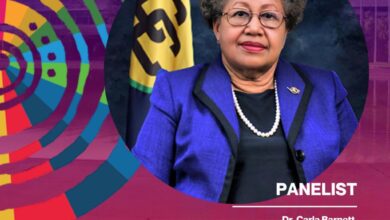
The Secretary-General, Dr. Carla Barnett, in her opening remarks, emphasised that the Meeting was being convened at a moment of profound global uncertainty, marked by escalating climate impacts, biodiversity loss, pollution, and weakening multilateral cooperation, all of which disproportionately affect Small Island Developing States. She underscored the Caribbean Community’s growing leadership in global environmental governance, welcomed the election of CARICOM representatives to senior positions within the United Nations Environment Assembly, and highlighted the importance of a unified regional voice in forthcoming international processes, including the Thirty-First Conference of the Parties of the United Nations Framework Convention on Climate Change (COP31), the Global Plastics Treaty negotiations, and the Seventeenth Conference of the Parties of the United Nations Convention of Biological Diversity (UNCBD) COP17.
In his opening remarks, Chair of COTED, Honourable Orlando Habet, emphasised that CARICOM continues to navigate a complex landscape of climate impacts, biodiversity loss, and ocean pollution. He underscored the urgent necessity of integrated approaches to address these challenges together, rather than in silos. The Chair welcomed new Ministers to the Caucus, noting that their perspectives are vital as the Region sharpens its positions in global multilateral environmental processes. The Chair also highlighted the need for closer cooperation between Ministers of Environment and Finance in the face of disappearing Official Development Assistance (ODA) and development assistance to capitalise on windows of financing available for CARICOM Small Island Developing States (SIDS).
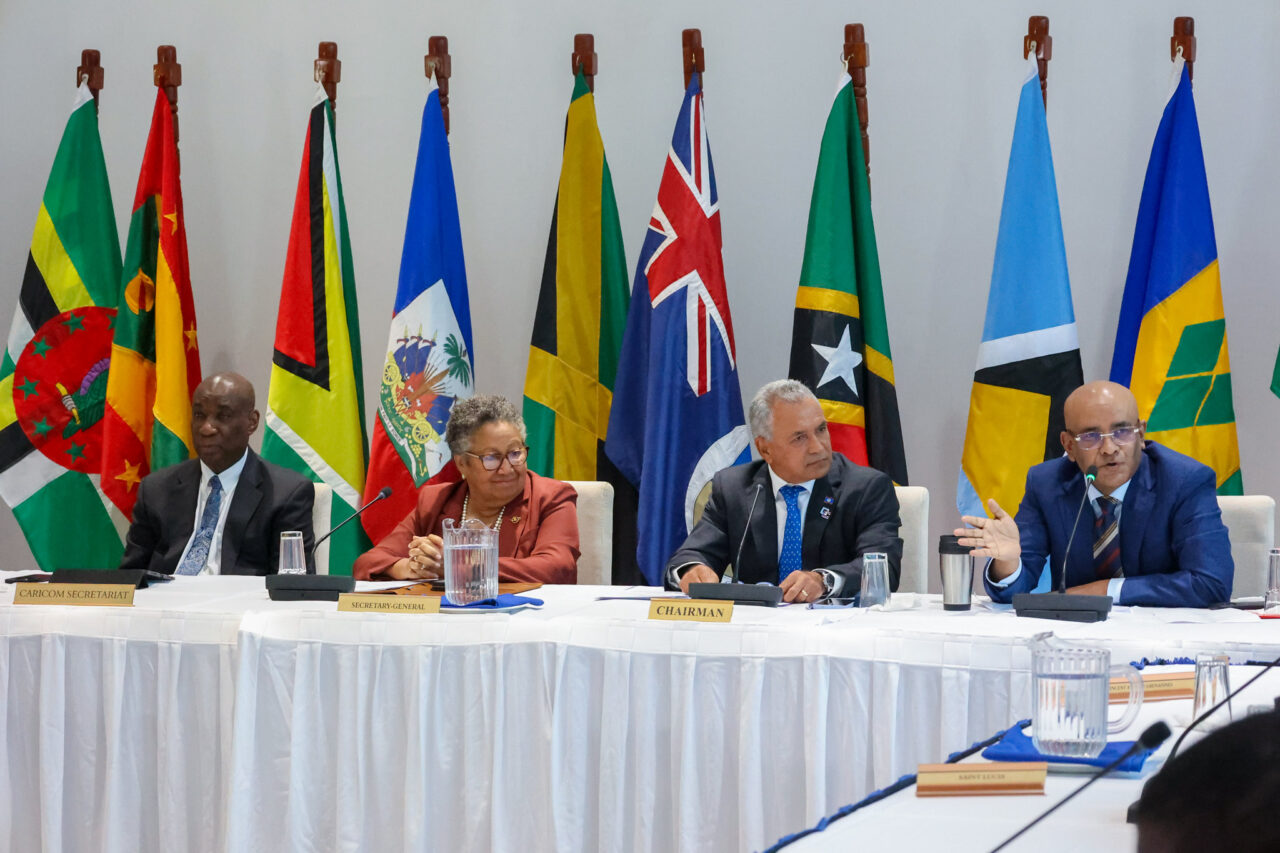
Keynote remarks were delivered by Vice President of the Cooperative Republic of Guyana, Dr. the Honourable Bharrat Jagdeo. He underscored the continued high dependence of global economies on fossil fuels and the need for a pragmatic reframing of the polarising climate discourse in achieving energy balance and net zero carbon economies. The Vice President proposed three main areas of convergence for CARICOM Member States.
- The need to invest in renewable energy to transition away from the 10% GDP (or higher) utilised for fossil fuel imports
- The urgent need to build climate and disaster resilience to mitigate the multitude of developmental shocks
- That curbing biodiversity loss is essential to human and economic development.
The Vice President urged Member States to be deliberate in their approach to climate-resilient development, citing the successes of Guyana in applying financing from forest credits to drive rural development, support indigenous communities, and build coastal resilience among other developmental advances.
Partners Roundtable and Structured Dialogue
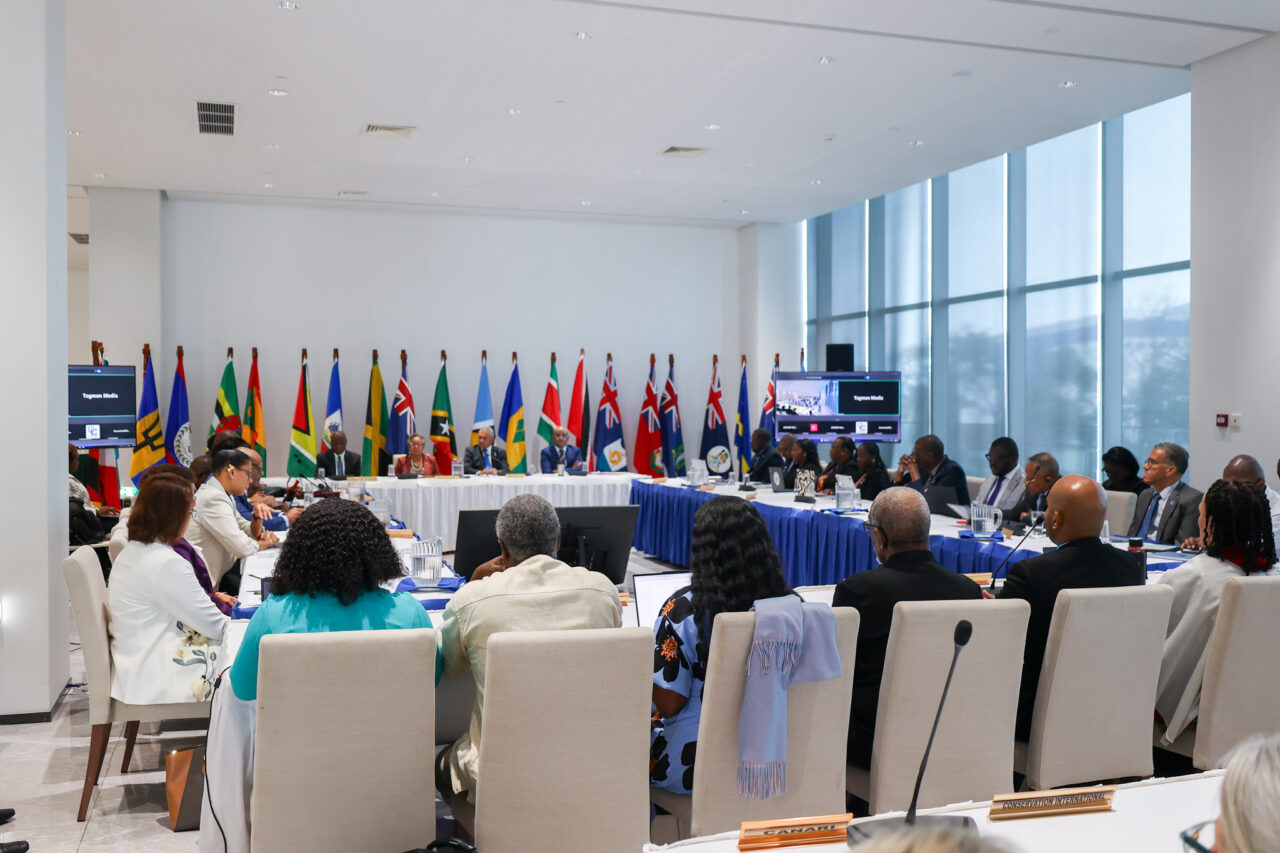
On the margins of the COTED, a Partners Roundtable and Structured Dialogue themed CARICOM Leadership in Oceans, Biodiversity, and Climate was convened. Co-chaired by Minister Habet and Mr. Liam McShane, Chargé d’Affaires of the United Kingdom High Commission in Guyana, the dialogue focused on moving beyond traditional donor-beneficiary dynamics toward models where CARICOM countries are co-designers of programmes and projects.
Key areas of the dialogue included:
- Alignment with Regional Frameworks: Discussions centred on better aligning development partner support with the CARICOM Environment and Natural Resources Policy Framework, the CARICOM Fisheries Policy and other similar regional frameworks.
- Ecosystem Monitoring and Restoration: Partners explored opportunities to support the restoration of critical mangroves, coral reefs, and seagrass beds to help Member States meet Kunming–Montreal Global Biodiversity Framework targets.
- Transboundary Challenges: Ministers and partners committed to deepening collaboration on shared threats, including sargassum influxes and marine pollution.
Climate Diplomacy
The meeting signalled a shift in strategy by agreeing that future capacity-building initiatives must prioritise targeted institutional development at the national and regional level over generic workshops. The Council called for the establishment of a CARICOM Peer Learning Network, supported by the Caribbean Community Climate Change Centre (CCCCC) and the Caribbean Development Bank (CDB), to share institutional knowledge on the journey from accreditation to execution for various climate funds.
A key part of regional coordination, The Council engaged in high-level bilateral sessions with representatives of the COP 31 President-Designate His Excellency Mr. Murat Kurum Minister of Environment, Urbanisation, and Climate Change, Turkiye, and the representative of the Honourable Chris Bowen MP, Minister for Climate Change and Energy, Department of Climate Change, Energy, the Environment and Water, Australia, President of Negotiations for COP 31.
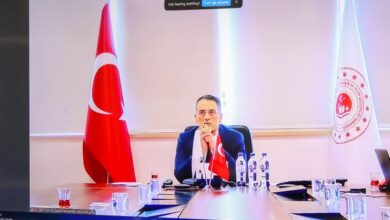
Mr. Fatih Ekmekci, General Director of Environmental Impact Assessment, Permits, and Supervision of Turkiye, represented His Excellency Murat Kurum, Minister of Environment, Urbanization, and Climate Change of Türkiye and COP 31 President-Designate. With multilateralism at the core of their strategy, Turkiye expressed their main priority for COP31 is to reach climate solutions in a narrowing window of opportunity, built upon trust, consensus and action.
The discussions focused on advancing climate resilience across vulnerable states, enhancing international cooperation and climate financing mechanisms and aligning priorities in preparation for COP31 (9–20 November 2026). CARICOM Ministers underscored the Region’s acute vulnerability to climate impacts and the urgent need for equitable climate action. The engagement reinforced CARICOM’s commitment to working with international partners, including Türkiye, to deliver meaningful outcomes for the Region at COP31.
Deputy President of COP31 Negotiations and Chief Negotiator, Dr Sally Box, on behalf of the Honourable Chris Bowen MP, Minister for Climate Change and Energy, Department of Climate Change, Energy, the Environment and Water, Australia, reflected on plans for taking forward all mandates arising from negotiated outcomes, synergies between the negotiated outcome and the Action Agenda to be advanced by the COP 31 President designate and the agenda for Pre-COP in the Pacific which. It was noted that a session at COP31 will focus on climate finance needs of Small Island Developing States. There was also an indication that the Ocean–Climate nexus will be prioritised.
Biodiversity
Regarding the Convention on Biological Diversity (CBD), the Council took note of the progress made in strengthening regional mechanisms to support biodiversity implementation, including the establishment of the CARICOM Technical and Scientific Cooperation Centre (TSCC) to serve as a subregional hub for biodiversity networks. Ministers reaffirmed support for the TSCC, noting its role in strengthening scientific, technical, and institutional capacity and supporting implementation of the Kunming–Montreal Global Biodiversity Framework. Ministers welcomed progress toward operationalisation of the Centre and underscored the importance of sustained resource mobilisation for its effectiveness.
Ministers expressed concern regarding the significant structural and capacity‑related challenges faced by CARICOM Member States in the preparation and submission of their Seventh National Reports to the Convention on Biological Diversity (CBD). They noted that delays in enabling activity funding, procurement bottlenecks in addition to data limitations, and demanding national approval processes, adversely affected timely reporting by the February 2026 deadline, with implications for the adequate reflection of CARICOM realities in global biodiversity assessments. To date, only two Member States were able to submit completed Seventh Nationals while one submitted partial information.
In response, Member States were encouraged to implement expedited internal validation measures and to explore the use of available international data sets, to finalise these reports ahead of COP 17. Ministers, likewise, approved the development of a CARICOM Negotiation Brief for COP-17 to ensure political visibility during the High-Level segments. They emphasised the need for coordinated regional preparation, including the development of a unified CARICOM negotiation position and early engagement of policymakers.
To further bridge implementation gaps, COTED encouraged engagement and collaboration among Member States, the Secretariat and regional and international partners to mobilise technical and financial support for national biodiversity strategies and action plans.
Ministers also signalled their intention to engage with the Executive Secretary of the UNCBD, the Global Environment Facility, the United Nations Development Programme and the President of UNCBD COP 17 to reinforce SIDS representation and priorities at COP 17 for Biodiversity.
Dialogue on Climate and Development Finance
Also on the margins of the COTED, a High-Level Dialogue was convened with Development Banks and Climate Funds to discuss, among other things, technical assistance available to strengthen proposal development and institutional capacity, expansion of readiness funding to support project pipeline development, shortening of approval-to-disbursement timelines flexibility to adjust projects when climate shocks occur mid-implementation, support for multi-country projects that pool CARICOM resources, and working with regional institutions to reduce transaction costs.
Conclusion
The Council expressed its commitment to a just, resilient, and sustainable Caribbean through integration across the climate-biodiversity-pollution nexus. Ministers reaffirmed the need for regional solidarity in global and regional environment and sustainable development negotiations to amplify the voices of SIDS as the Caribbean Community continues to be a leader in global solutions. The meeting concluded with expressions of thanks to partners who supported the week of activities, the Government of Guyana for its hospitality, and the Chairman for his stewardship of the two days of engagements.