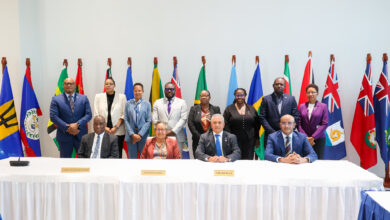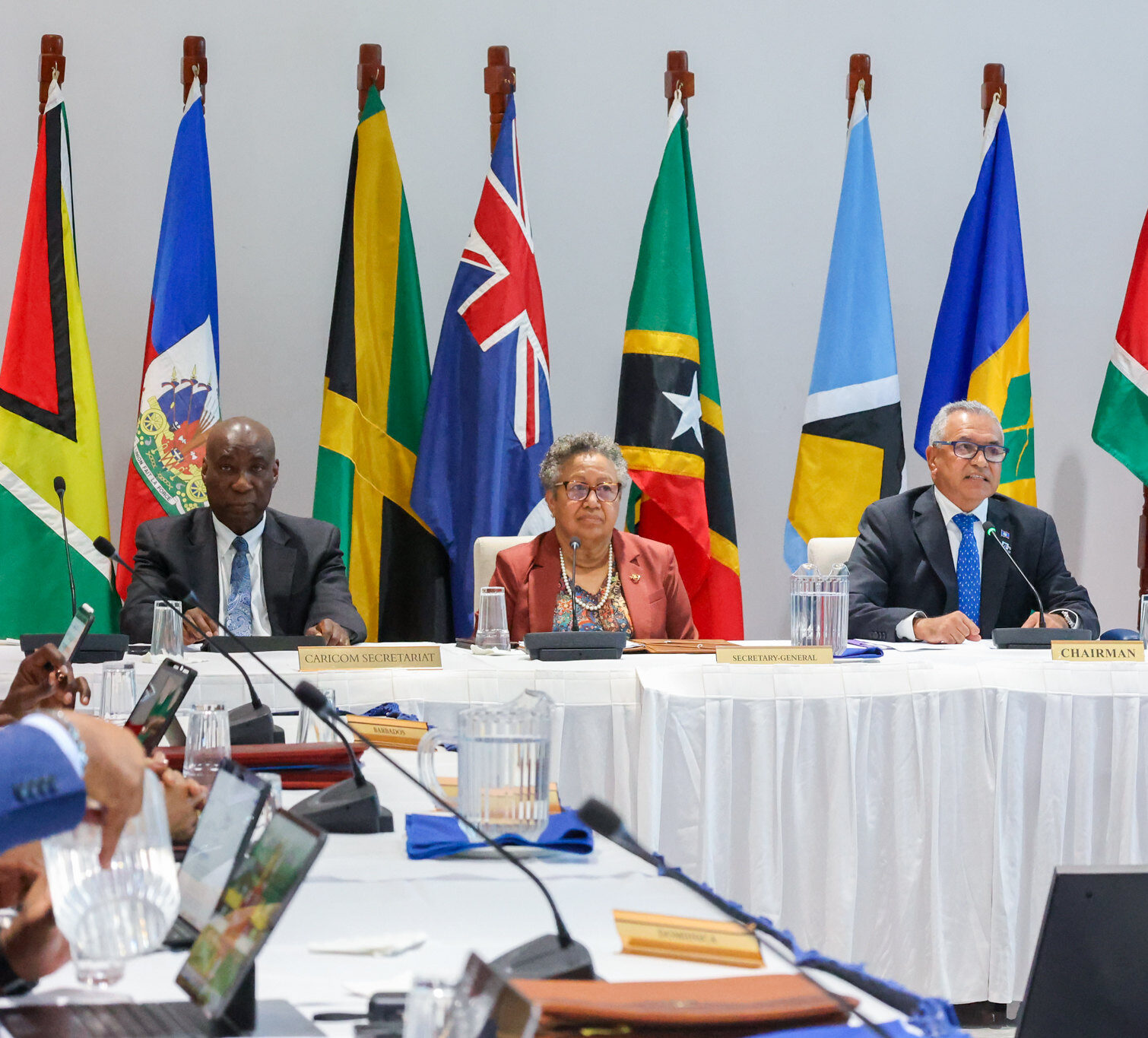
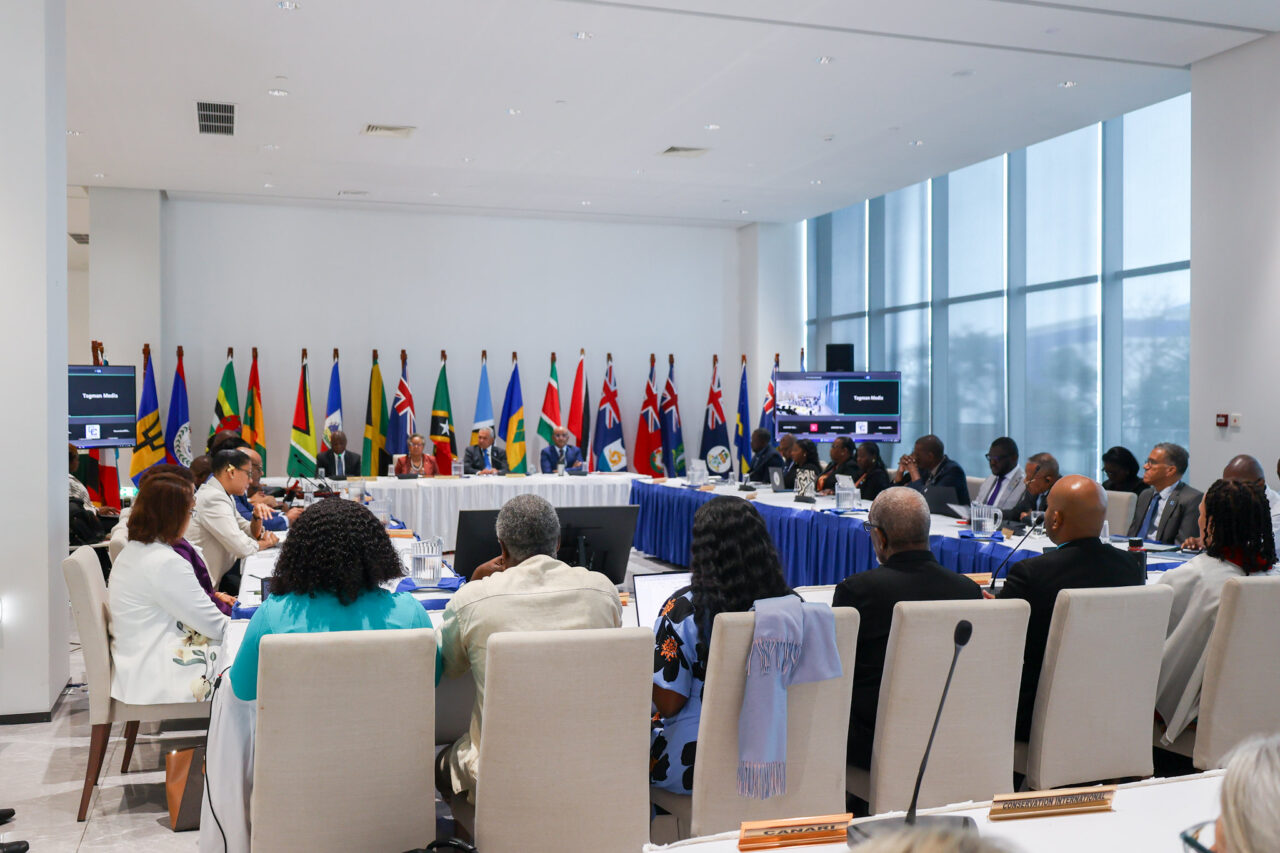
(CARICOM Secretariat, Turkeyen, Greater Georgetown, Guyana) – The importance of integrated approaches that address climate change, biodiversity loss, and pollution together, rather than in silos, was emphasised on Thursday 26 March, when Ministers of Environment and Sustainable Development from the Caribbean Community (CARICOM) met in Georgetown, Guyana.
Addressing the opening of the 124th Meeting of the Council for Trade and Economic Development (COTED) -Environment and Sustainable Environment, Minister of Sustainable Development, Climate Change and Solid Waste Management of Belize, and Chair of the COTED, the Honourable Orlando Habet, said that the funding windows from the Global Environment Fund, Global Climate Fund, Adaptation Fund, Global Biodiversity Framework Fund, are increasingly structured around integrated programming designed to deliver multiple benefits across sectors.
Minister Habet said that the work before COTED, reflects an integrated vision with interconnected discussions on climate negotiations; global biodiversity framework; chemicals and waste; plastic pollution; and ocean governance.
“What happens on land affects our reefs and fisheries. Decisions we take in energy, transport, and agriculture shape the health of our ecosystems and the resilience of our peoples. Our citizens do not experience “climate”, “biodiversity” and “pollution” as separate agendas; they feel them together, in their food security, water availability, health, and livelihoods,” he stated.
In this regard, the COTED Chair outlined the importance of collaboration between environment ministries and ministries of finance and planning to develop investment-ready programmes that address multiple environmental objectives simultaneously.
He also called for stronger national ownership in the design and implementation of projects, noting that interventions should align with national development priorities, institutional capacities and long-term strategies. COTED, according to the Chair, has a responsibility to articulate clearly the type of support required by CARICOM Small Island and Low-lying Coastal Developing States, including predictable and flexible financing aligned with nationally identified sustainable development priorities.
Read the Honourable Orlando Habet’s Full Remarks below:
Colleagues, distinguished Ministers, Ambassadors, representatives of the CARICOM Secretariat, regional institutions, development partners, ladies and gentlemen, good morning.
It is an honour for Belize to chair this One Hundred and Twenty-Fourth Special Meeting of the Council for Trade and Economic Development on Environment and Sustainable Development. Allow me first to extend a very warm welcome to all delegations, both those joining us in Georgetown and those connecting virtually, and to thank the Government and people of the Cooperative Republic of Guyana for their generous hospitality and excellent arrangements.
Since we last met in January, our region has continued to navigate an increasingly complex landscape of climate impacts, biodiversity loss, ocean pollution, and geopolitical uncertainty. Yet we have also seen encouraging signs of Caribbean leadership in multilateral environmental processes and in shaping global debates on climate, nature, and pollution. Our task over the next two days is to build on that momentum with a clear sense of purpose and unity.
I wish, in that regard, to acknowledge and warmly welcome our colleagues who are new to government, as well as those who are seasoned in public life but newly entrusted with the environment and climate portfolio. You are joining this Caucus at a pivotal moment, and your perspectives will be vital as we sharpen our regional positions and chart the next phase of our collective work.
Colleagues, at our last Special Meeting we underscored the importance of integrated approaches that address climate change, biodiversity loss, and pollution together rather than in silos. We noted that funding windows from the GEF, GCF, Adaptation Fund, the Global Biodiversity Framework Fund and others are increasingly structured around integrated programming, and that our projects must be designed to deliver multiple benefits across these conventions and thematic areas. That message remains as urgent today as it was in January.
The programme before us reflects this integrated vision. Our discussions on climate negotiations, the global biodiversity framework, chemicals and waste, plastic pollution, and ocean governance are deeply interconnected. What happens on land affects our reefs and fisheries. Decisions we take in energy, transport, and agriculture shape the health of our ecosystems and the resilience of our peoples. Our citizens do not experience “climate”, “biodiversity” and “pollution” as separate agendas; they feel them together, in their food security, water availability, health, and livelihoods.
In that context, I want to reflect briefly on the distinct but complementary roles of Environment Ministers and Finance Ministers. Our Finance colleagues carry the heavy responsibility of macroeconomic stability, debt management, and fiscal space. But it is Environment and Climate Ministers who are closest to the design of the pipelines, policies, and regulatory frameworks that determine whether climate and environmental finance can actually flow and deliver impact. We are the bridge between global commitments and local implementation.
What then can Environment Ministers do to help unlock the financing our region so urgently needs? First, we can work with our Ministries of Finance and Planning to bring forward integrated, investment-ready programmes that speak simultaneously to climate resilience, nature protection, and pollution reduction, and that match the programming logic of funds such as the GEF, GCF, GBFF and others. Second, we can champion the reforms in governance, transparency and safeguards that give confidence to investors and development partners.
Third, we can insist that our national development, climate and biodiversity strategies are not static documents on a shelf but living frameworks that guide bankable pipelines.
Critically, we must also ensure that national ownership and national design remain at the heart of all interventions. Too often, projects are externally driven, fragmented, or insufficiently aligned with our own long-term priorities and institutional realities. As Chairs of COTED (Environment), we have a responsibility to articulate clearly what “good support” looks like for CARICOM SIDS: long-term, predictable, flexible, and aligned with our nationally determined priorities, capacities, and systems.
At the same time, we acknowledge and deeply appreciate the role of our development partners and donors. Their technical and financial support whether through climate funds, biodiversity funds, development banks, or bilateral cooperation has been indispensable in advancing our regional and national agendas. We welcome their presence at this meeting and the Partners Roundtable, and we look forward to a frank and constructive dialogue on how to make our cooperation more strategic, more coherent, and more responsive to the realities on the ground in our member states.
Regional approaches will be central to this effort. In an era of constrained resources, smaller allocations, and growing demands, the Caribbean cannot afford duplication or fragmentation. By speaking with one voice where possible, coordinating our positions in global fora, and developing regional or multi-country programmes, we improve our chances of accessing finance at scale, influence agenda-setting, and ensure that initiatives reflect the specific vulnerabilities and strengths of SIDS. Our cooperation under COTED is therefore not an option; it is a necessity.
If we work together as a region, we can secure more prominent and influential seats in global organizations and negotiating spaces, positions from which we can more effectively shape policies and decisions so that they fully reflect the specific needs, circumstances and ambitions of SIDS.
I would also like to highlight, in a very concrete way, how bilateral cooperation can reinforce our regional ambitions. In recent months, Belize and Guyana have taken steps to deepen collaboration, and this emerging partnership is not just about two countries; it is a signal of what is possible when CARICOM member states pool expertise, share lessons, and develop joint approaches that others in the region can adapt and benefit from. The benefits of such cooperation go well beyond any single project.
As Chair, I encourage similar forms of enhanced inter-CARICOM cooperation across the spectrum from climate change to biodiverse tropical forests and our common commitment to low-emissions, climate-resilient development, oceans and blue economy to chemicals and waste, to nature-based solutions and resilient infrastructure.
Colleagues, the agenda over these two days is ambitious but carefully structured. We will engage with partners and climate funds, we will refine our regional positions on key multilateral processes, and we will consider practical steps to improve coordination among our national and regional institutions. Let us use this opportunity not only to react to global developments, but to shape them grounded in our shared realities, our scientific understanding, and the aspirations of our people.
As we begin our deliberations, I invite us to keep three guiding principles in mind: integration across the climate–biodiversity–pollution nexus; national ownership and nationally designed interventions; and solidarity within our own countries, across CARICOM, and with partners who share our vision for a just, resilient, and sustainable Caribbean. If we hold fast to these principles, I am confident that the decisions we take here will help unlock the finance, partnerships and policy shifts that our region urgently requires.
With those remarks, I once again welcome you all, thank you for your commitment and presence, and invite us to proceed to the next item on our agenda