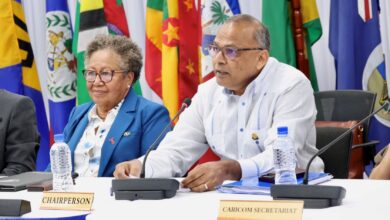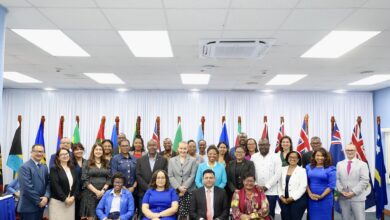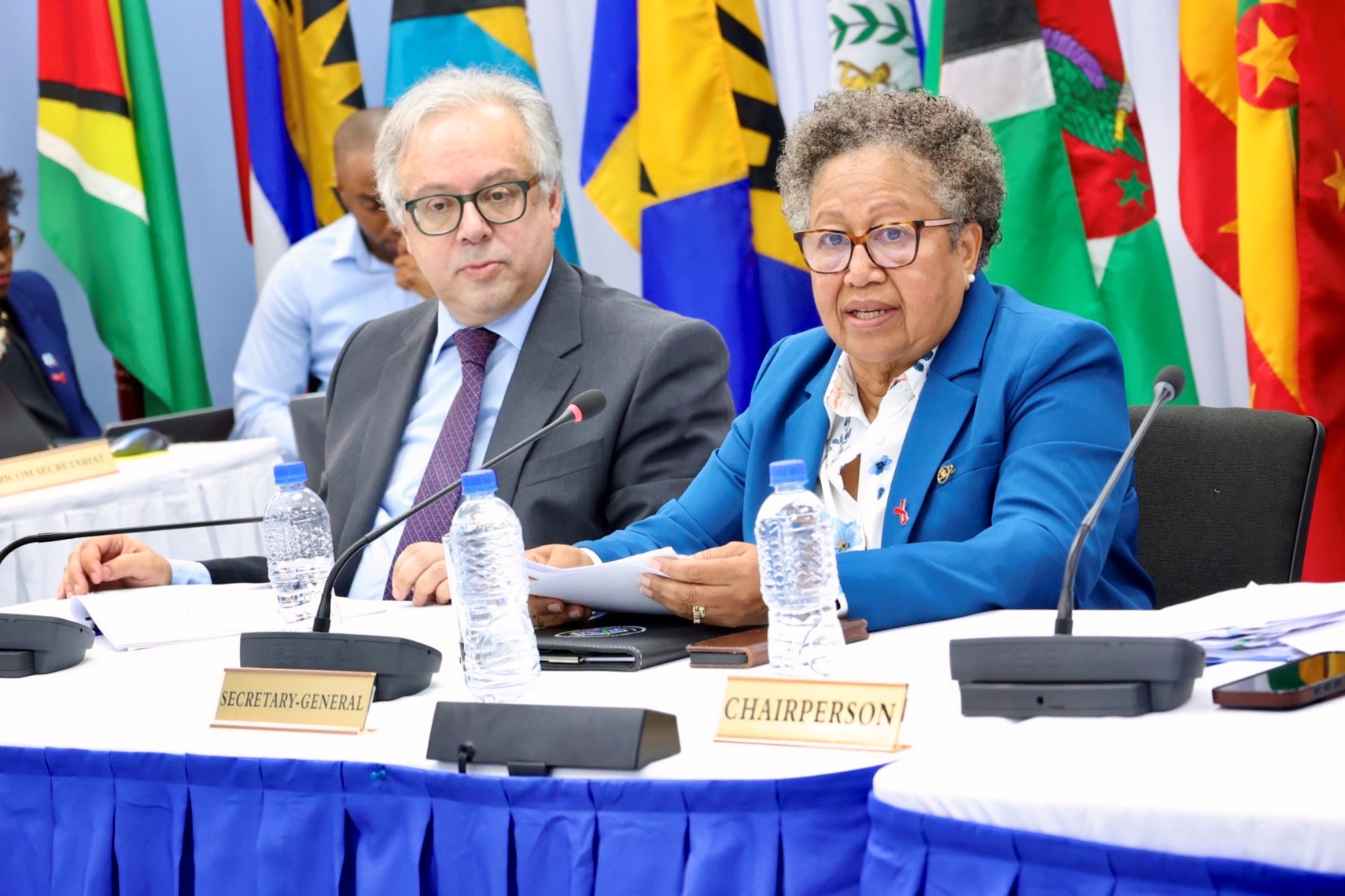
At the opening of the Thirty-Seventh Special Meeting of the Council for Human and Social Development (COHSOD)—Health (Tuesday, 21 April 2026 | Georgetown, Guyana), CARICOM Secretary-General Dr Carla Barnett highlighted progress in disease surveillance, laboratory capacity, and emergency preparedness, while stressing that the sustainability of the health workforce remains a pressing priority. Dr Barnett underscored the need to accelerate action to stem the loss of skilled professionals and strengthen capabilities, noting the role of the Human Resources for Health Caribbean Commission in shaping a coordinated regional response.
She also emphasised the urgent challenge of non-communicable diseases (NCDs), which continue to account for the majority of premature deaths in the Region despite longstanding commitments under the Nassau and Port of Spain Declarations. While progress has been made in areas such as physical activity promotion and food production, she called for decisive measures to improve diets, including front-of-package labelling and reduced reliance on imported, highly processed foods.
Dr Barnett advocated for a whole-of-society approach, stronger regional coordination, and expanded partnerships to build resilient health systems, safeguard human capital, and ensure that the “health of the Region” continues to underpin its economic and social development.
Please read her complete remarks below.
Salutations
Good morning,
It is my pleasure to say a few words at the opening of this Thirty-Seventh Special Meeting of the Council for Human and Social Development (COHSOD) – Health.
I extend deep appreciation to the Government and People of Guyana for the warm hospitality and the excellent arrangements for this important Meeting. We are headquartered in Guyana so we are used to the warm hospitality here, Minister, but I am sure it’s an excellent experience for our visitors.
I wish to start by acknowledging that our progress in the health sector, though driven by the commitment of our Member States, is also advanced through the sustained support of Regional Institutions and our development partners. We thank all of you for your strategic contributions to advancing public health across our Region.
In the Caribbean Community we have seen sustained efforts to strengthen disease surveillance, expand laboratory capacity, and reinforce preparedness and response mechanisms for public health emergencies. These collective actions remain fundamental to safeguarding regional public health.
This Meeting will consider several longstanding priorities, most critically, the sustainability of our health workforce. For decades, CARICOM Heads of Government have underscored the urgency of addressing human resource gaps in our health systems. Some progress has been made, for example, on harmonising standards and policies for nursing and midwifery education, practice, and regulation.
However, progress must now accelerate and resolve into action – action to stem the persistent loss of skilled professionals, and action to build critical capabilities. This requires moving decisively to advance practical and coordinated solutions. In this regard, the work of the Human Resources for Health Caribbean Commission remains a critical platform for shaping a coherent and collective regional response.
Even as we work to build our workforce, we must confront arguably the most persistent and pervasive threat to our human capital, the epidemic of Non-Communicable Diseases (NCDs). Twenty five years ago, in the Nassau Declaration (in 2001) that was entitled “The Health of the Region is the Wealth of the Region”, Heads of Government clearly articulated the link between health and economic and social development as they committed to, among several other critical health sector goals, the development of a Regional Strategic Plan for the Prevention and Control of Chronic Non-Communicable Diseases.
Some years later, in 2007, with the Port of Spain Declaration, “Uniting to Stop the Epidemic of Chronic NCDs”, our Region further demonstrated global leadership. Still today, NCDs continue to account for the majority of premature deaths across our Community, affecting persons in every age group.
This is not because nothing has been done. Quite a bit has been done to implement the 15 mandates set out in the Port of Spain Declaration, from moving, to eating well, access to medicine – all those things.
We have seen much progress, for example, with the goals of promotion of physical activity in schools and generally in our communities. There is increased access to medical intervention. There is excellent public education, etc. Have these efforts been enough? The numbers suggest that much more needs to be done. Much greater effort is required, in particular, to improve access to healthy diets. This requires, firstly, increasing availability of affordable, fresh, meaning locally produced, food. Production data shows that we have been making some good progress in the last several years with our regional plan, led by our Ministers of Agriculture, to reduce food imports by 25% by 2025 – now extended to 2030. There’s been significant investment in food production.
But improving the health of our diets also means reducing consumption of mostly imported, highly preserved food – which we know normally means high salt and oil content – all those items that we know impact hypertension, diabetes– all those things that we need to be focusing on. In this effort, public education and point of purchase information are critical.
This is where I make a call for this Council to seek to refocus on addressing the long-delayed front of package labelling issue which is critical to informing consumer decision-making.
In our Region, some countries are moving ahead. In South America some countries are leading by examples that we can safely follow. But we need to act. We must be decisive. Tackling NCDs requires a genuine whole-of-society approach, that engages sectors beyond health, including education, trade and finance, to implement the regulatory measures which are necessary to protect our populations by facilitating well-informed consumer decisions.
Since we have long acknowledged the link between health and economic and social development, the effectiveness of our health programmes, the sustainability of our health systems, and the strength and resilience of our economies and communities will depend on our ability to transition to proactive, preventative wellness.
Member States have demonstrated that together we can make good progress. Our work, for example, under the Pan-Caribbean Partnership against HIV and AIDS (PANCAP), with the support of global financing mechanisms such as the Global Fund, reflects our capacity to act collectively while responding to national realities.
And in this regard, those of you around this table who have been around long enough know that when we talk about the “Health of the Region being the Wealth of the Region”, we were talking about establishing PANCAP. Same timeframe, same conversation – we have made much more progress in one, as opposed to the other.
This collective approach is increasingly critical in the context of declining global financing support and an unstable geopolitical environment. This global environment reinforces the importance of focusing on building national and regional capabilities. This global environment calls for a strong, coordinated regional voice that enhances our ability to advocate in our own interest to ensure that our priorities remain visible. And of course, this global environment is forcing us to broaden our strategic alliances, to strengthen mutually beneficial relationships, with existing global partners but also with new partners, to advance shared priorities on the global stage. One of the clearest and loudest lessons learned from the COVID pandemic- those of you who remember know that at that time when we needed to access early and dependable sources of vaccines and medical supplies – we know where we got it first. We know who helped us and we have begun to build on those relationships to ensure that they can evolve into longstanding and dependable partners as well.
Ministers, Delegates, Participants, I don’t want to take up too much of your time. You are the experts and you will consider and advise us on all the matters that are on the table. I will end my remarks here by wishing you productive deliberations today, and I am confident that your decisions will further solidify the health and resilience of our Community, and our people.
Thank you very much, ladies and gentlemen.