“We can treat this as just another meeting or a moment of consequence.
A moment to decide whether we act as individual states or as one Caribbean.
A moment to decide whether we adapt slowly or transform boldly.
Our people are not waiting for reports. They are waiting for care. For access. For outcomes. We need to deliver!“
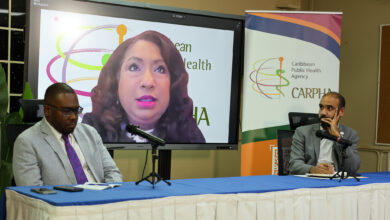
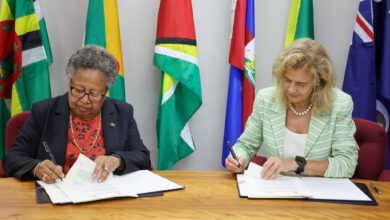
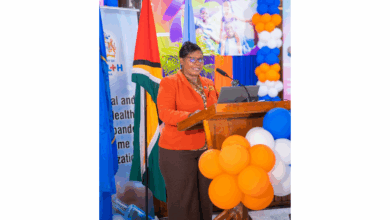
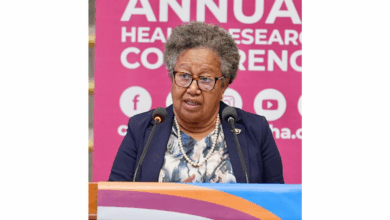
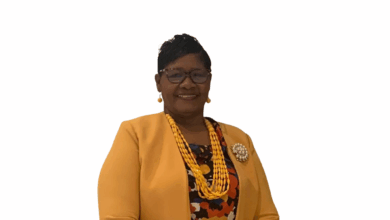
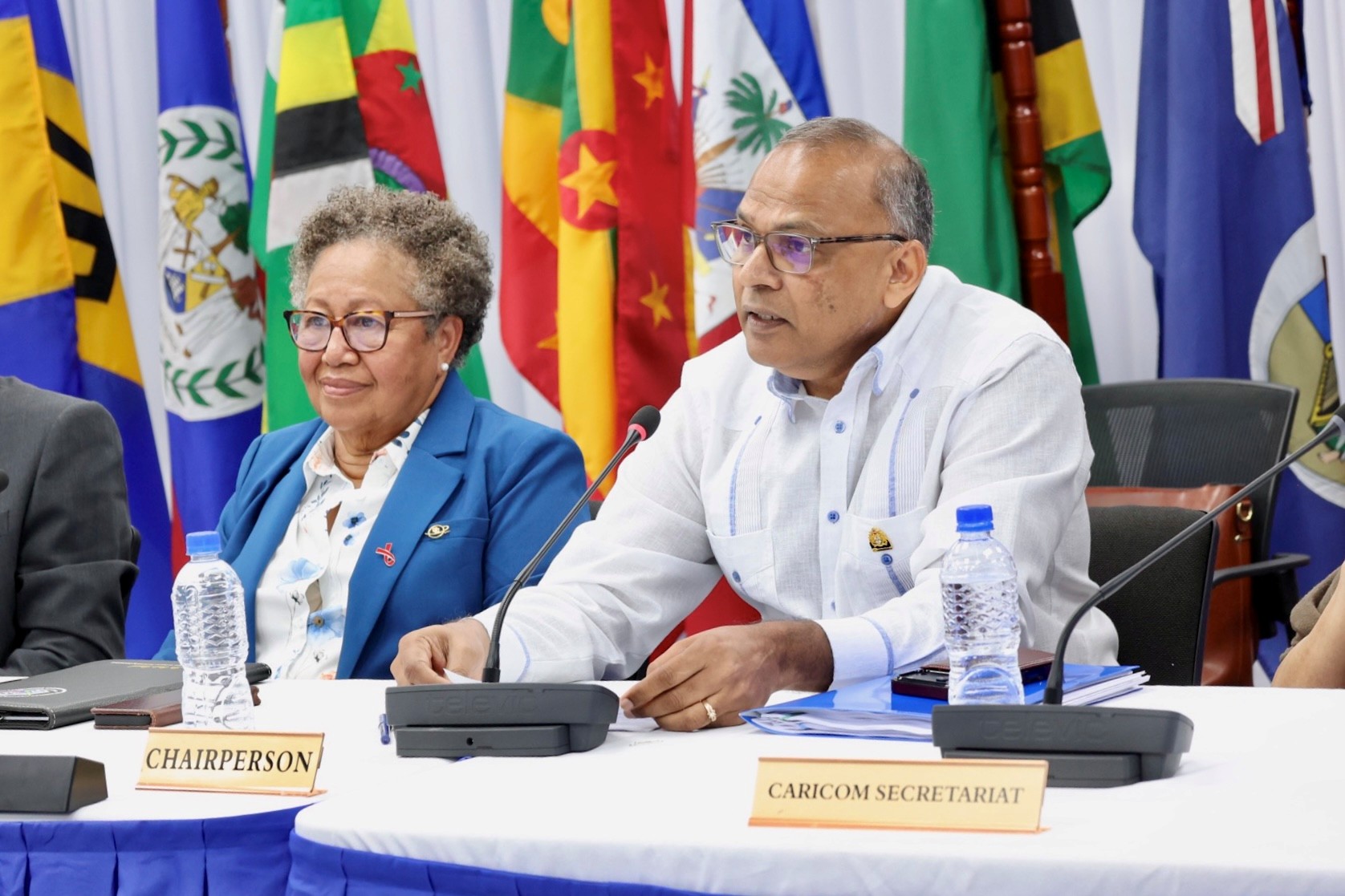
This was a key message delivered at the 37th Special Meeting of the CARICOM Council for Human and Social Development (COHSOD) – Health, by Chair Honourable Dr Frank Anthony, who underscored the urgent need for regional collaboration to address converging health crises and financing challenges.
The meeting brought together CARICOM Ministers of Health, Chief Medical Officers, national health officials and regional institutions such as the Caribbean Public Health Agency (CARPHA) and development partners, including the Pan American Health Organization (PAHO).
Dr Anthony called for stronger partnerships within the Region and deeper engagement with international partners, including the European Union, the Global Fund, and the Pandemic Fund. He emphasised that the Pandemic Fund offers a transformative opportunity to invest in prevention, strengthen surveillance, modernise laboratories, and build resilient supply chains.
Looking ahead, he urged Member States to align priorities, pool expertise, and present a unified voice to secure resources and strengthen health security. He also raised critical questions about building efficient and equitable systems, training and retaining the health workforce, financing ambitions sustainably, and exploring new models such as a regional health insurance framework.
Dr Anthony also emphasised the importance of moving from dialogue to delivery, ensuring that commitments translate into tangible results. He called on Member States to act collectively as one Caribbean, transforming boldly to meet the needs of citizens who are waiting not for reports, but for care, access, and outcomes.
Please listen to Dr Anthony’s remarks:
Please read his complete speech below:
Salutations
Good morning.
From the people of Guyana, I welcome you to Georgetown, to this Thirty-Seventh Special Meeting of COHSOD, Health.
And to those who have travelled here, welcome. We are honoured to host you, and I hope you will see firsthand the transformation underway, not only in health but across our country.
We meet at a moment that asks something of us. A moment that tests whether we will be content with progress or committed to transformation.
Because the truth is, health in the Caribbean is changing. The world is changing. And the pace of that change is accelerating.
In Guyana, we have chosen not to wait. We have chosen to act.
We are expanding access to care, improving both the range and quality of services in every region. Preventive care is now central to our strategy.
Today, we screen children from nursery through secondary school, reaching tens of thousands annually, many for the first time, and correcting vision and hearing impairments that would otherwise limit educational attainment.
We are strengthening early detection because we know that catching disease early is not just good medicine, it is the difference between life and death.
We have expanded national screening programmes for breast, cervical, and prostate cancers, integrating diagnostics, treatment pathways, and follow-up care. Soon, we will introduce colorectal cancer screening, completing a continuum of care that shifts our system from reactive to proactive.
At the primary level, we have added more than 30 new health posts and centres in the last four years, bringing care closer to communities. At the secondary level, six new regional hospitals are operational, with another eight under construction, many equipped with advanced diagnostic capabilities, including imaging and specialised services.
This is not simply infrastructure. It is access. It is equity. It is dignity.
We have also invested heavily in human capital, because no health system can function without skilled professionals. Through partnerships with the Pan American Health Organization, the European Union, and our local institutions, including the University of Guyana, we are training doctors, nurses, specialists, and allied health professionals.
We are also expanding postgraduate education, introducing hybrid training models, and creating new pathways for specialisation, ensuring that our workforce is not only growing but evolving.
At the same time, we are building for the future. Digital health is no longer aspirational; it is operational.
Electronic Health Records are being deployed, starting at the Georgetown Public Hospital, and will form the foundation of a nationwide system. Telemedicine now connects more than 150 hinterland and remote communities, bringing specialist care to regions that were once isolated.
Through telepathology, teleophthalmology, and teleradiology, we are integrating expertise across distances, reducing delays, improving diagnosis, and saving lives.
Artificial intelligence is being introduced to support diagnostics by enhancing the interpretation of X-rays, CT scans, ultrasounds, and MRIs. In dentistry and prosthetics, 3D printing technologies are enabling faster production of customised solutions, improving both efficiency and patient outcomes.
These innovations are not about technology for technology’s sake. They are about equity, efficiency, and excellence in care.
We are also positioning Guyana as a hub for scientific advancement. In partnership with the European Union, we are developing a Life Sciences Park, designed to support research, pharmaceutical manufacturing, vaccine development, and medical innovation.
A central feature will be a biobank that supports genomic research, strengthens disease surveillance, and enables precision medicine tailored to our population.
Colleagues,
But even as we make progress nationally, we must confront a larger truth: We cannot solve these challenges alone. Because the threats we face do not respect borders.
We are living through a convergence of crises, emerging infectious diseases, climate change, antimicrobial resistance, and the growing burden of non-communicable diseases.
In the Caribbean, these challenges are intensified by our structural realities, small economies, high exposure to climate shocks, workforce migration, and dependence on global supply chains.
We face rising rates of hypertension, diabetes, and obesity, placing enormous pressure on our health systems. At the same time, vector-borne diseases such as dengue continue to challenge our public health infrastructure, particularly amid changing climate patterns.
And as if this is not enough, we are also battling an infodemic, where misinformation spreads faster than evidence, undermining vaccination programmes, public trust, and health outcomes.
Colleagues,
And layered on top of these challenges is a changing global financing landscape. Development assistance is tightening. Donor priorities are shifting. And new global crises are competing for limited resources.
For the Caribbean, this creates a profound paradox: We are classified as middle or high-income, yet we remain highly vulnerable.
Too wealthy to qualify for concessional financing, yet too constrained to fully finance resilience on our own.
We face fragmented funding streams, short-term project cycles, and complex application processes that often disadvantage small states with limited administrative capacity.
At the same time, rising debt burdens are reducing fiscal space, limiting our ability to invest in health, even as demands increase.
So we must ask: How do we build sustainable, resilient health systems in a financing environment that does not fully reflect our realities?
Part of the answer lies in partnership. We must strengthen the partnership among ourselves. We must deepen engagement with the European Union, the Global Fund to Fight AIDS, Tuberculosis and Malaria, and the Pandemic Fund.
And let me speak clearly about the Pandemic Fund. This is a transformative opportunity.
It allows us to invest in prevention rather than reaction, to strengthen surveillance systems, modernise laboratories, train rapid response teams, and build resilient supply chains. It enables us to prepare not just for the next pandemic, but for the unknown threats that lie ahead.
But accessing these resources requires more than intention. It requires coordination. It requires technical capacity. It requires strong, bankable proposals.
As a Region, we must align our priorities, pool our expertise, and present a unified voice to ensure that the Caribbean is not left behind but positioned at the forefront of global health security.
Colleagues,
The questions before us are clear:
How do we build systems that are more efficient, resilient, and equitable?
How do we train and retain the workforce we need?
How do we ensure that every citizen receives quality care, regardless of geography or income?
And how do we finance these ambitions sustainably?
Is it time to consider new models, such as a regional health insurance framework?
As we move deeper into the digital era, we must also address new responsibilities, data protection, cybersecurity, and interoperability. Our systems must be secure, our data protected, and our platforms integrated across borders.
The CARICOM Secretariat must play a catalytic role, mobilising resources, strengthening partnerships, and supporting Member States in translating policy into practice.
Because discussion alone is not enough. We must move from dialogue to delivery.
From plans to implementation. From commitments to results.
Colleagues,
We can treat this as just another meeting or a moment of consequence.
A moment to decide whether we act as individual states or as one Caribbean.
A moment to decide whether we adapt slowly or transform boldly.
Our people are not waiting for reports. They are waiting for care. For access. For outcomes.
We need to deliver!