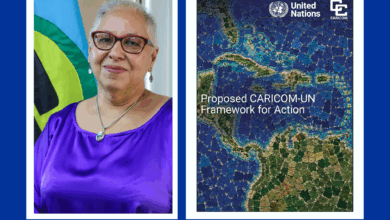
The Caribbean Community (CARICOM), the United Nations (UN), and the United Nations Development Programme (UNDP) formally launched two landmark regional documents: the CARICOM–UNDP Diagnostic Document and the Proposed CARICOM–UN Framework for Action, establishing a shared and coordinated implementation path for confronting crime and violence across the CARICOM through a public health lens.
Prevention: A System-Level Reframing
The launch, held in Basseterre on 21–22 May 2026, brought together government representatives, regional institutions, the UN system, civil society, academics and international development partners. The two instruments shared at the launch were developed through a sustained process of regional consultation and represent a multi-sector commitment to prevention-oriented security governance in CARICOM.
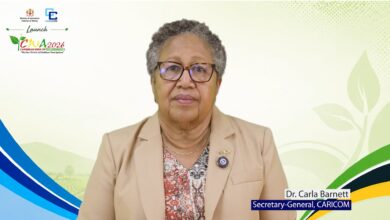
The Diagnostic Document consolidates data, analysis, trends, and other indicators making the case for the public health approach to crime and violence. The Framework for Action Document operationalises the political commitments already endorsed by CARICOM Heads of Government, setting out a coordinated, multi-sector implementation pathway spanning health, education, justice, social protection, and community systems to support prevention in nationally divergent contexts.
Central to both documents is the recognition that violence reduction depends on cross-sector coordination, protected financing, and sustained political will so that prevention measures can be scaled up where needed and endure beyond individual political cycles.
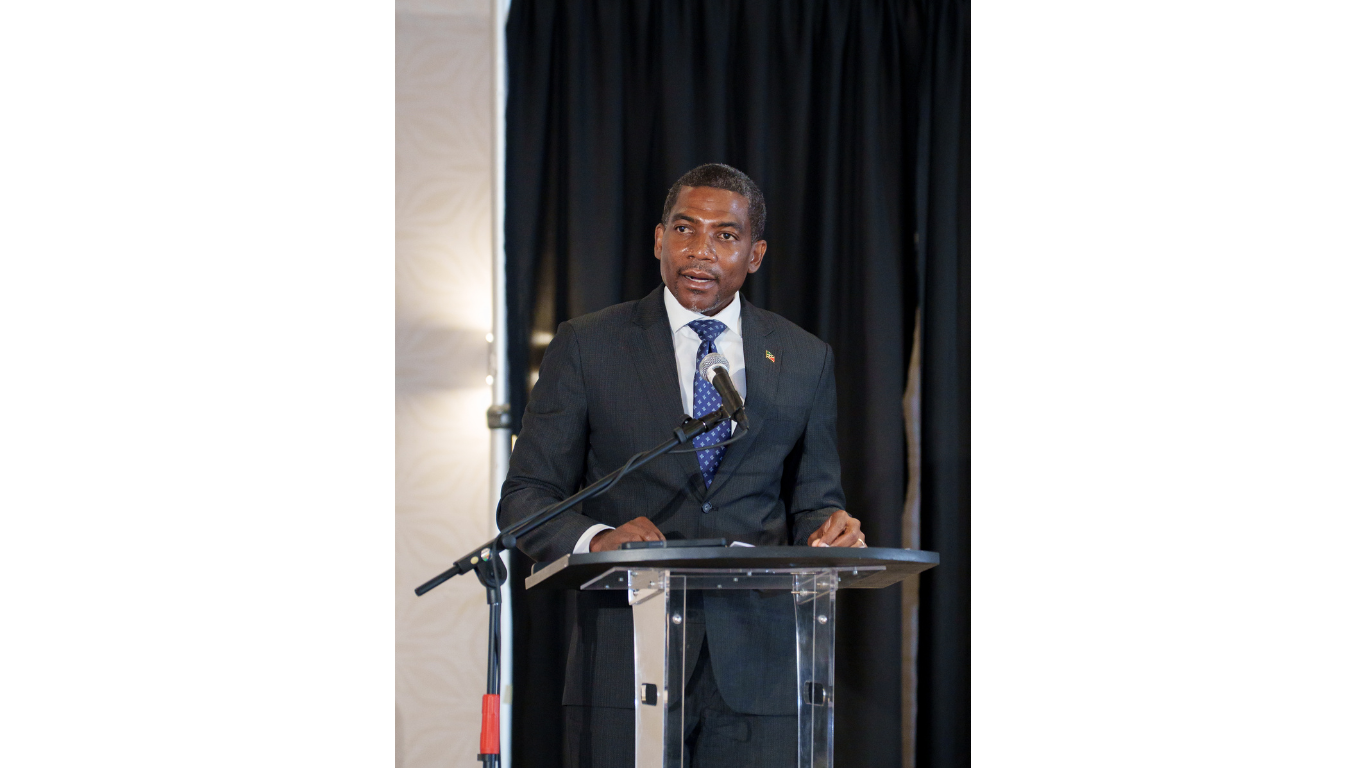
Honourable Dr Terrance Drew, Prime Minister of St Kitts and Nevis and Chair of CARICOM, explained that one of the most difficult challenges in advancing a preventative approach to crime and violence is not necessarily proving the science behind it, but convincing leadership structures and the wider society to embrace a shift away from viewing crime solely through the lens of policing and punishment. He stated, “Nothing can really be done unless there is political will. Political will is what allows us to implement policies and to put whatever is necessary behind them. To see CARICOM and the United Nations now throwing their weight behind the preventative approach for the Caribbean, I am hopeful because I know this will work. And if this framework is implemented, the next decade, when it comes to crime and violence in the Caribbean,will be much better than the previous decade.”
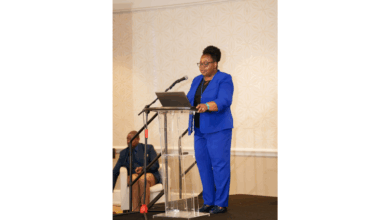
Alison Drayton, Assistant Secretary-General for Human and Social Development, CARICOM Secretariat, commented, “Interconnected threats demand more than isolated national responses. They require coordinated regional action grounded in evidence, solidarity, resilience, and sustainable development. This launch represents a pivotal transition from shared concern to collective, strategic action. By formalising the CARICOM-UNDP Diagnostic Document and the CARICOM-UN Action Framework, we are translating the political consensus of our Heads of Government into a sophisticated, region-wide mechanism for change. Our partnership with the UNDP is instrumental in this evolution. It allows us to address the fundamental drivers of insecurity, poverty, social exclusion, and lack of opportunity, with a comprehensive development agenda.”
Stephanie Ziebell, Deputy UNDP Resident Representative for Barbados and Eastern Caribbean , speaking on the first day, said, “The CARICOM-UNDP Diagnostic Document we are launching… plays an important role in helping us move beyond treating symptoms. It provides a shared regional evidence base that allows us to better understand how violence is shaped by interconnected social, economic, institutional, and even transnational dynamics… At the same time, the accompanying CARICOM-UN Framework for Action takes us a step further. It moves us from understanding the problem to thinking about how we build solutions. It is not a one-size-fits-all blueprint, but rather a flexible framework that countries can adapt to their own realities and their own priorities.”
Johanna Kazanna, UN Resident Coordinator for Trinidad and Tobago, Suriname, Aruba, Curaçao and Sint Maarten stated: “Across the Caribbean, governments are increasingly recognising that violence cannot be addressed through enforcement measures alone. Sustainable reductions in violence require prevention systems that are rooted in communities, supported by institutions, informed by data, and coordinated across sectors. These documents reflect an important regional shift toward treating violence as a development and governance challenge, not simply a security issue. The United Nations system working as one, is proud to support CARICOM and Member States in building the long-term enabling conditions for prevention, resilience, and social cohesion across the Region.”
The Basseterre launch is a bridge between regional policy and national implementation and a catalyst for the 3rd CARICOM Regional Symposium on Crime and Violence, informing deliberations by Heads of Government and potential outcomes. A Strategic Alignment Session on Day 2 will draw together inputs from across the two-day dialogue to identify priority implementation paths toward a Regional Framework 2026–2030.
About UNDP in the Caribbean
UNDP works in over 170 countries and territories to eradicate poverty and reduce inequalities and exclusion. In the Caribbean, UNDP’s Multi-Country Office for Barbados and the Eastern Caribbean supports governments and communities across governance, resilience, climate, and human development.
About CARICOM
The Caribbean Community (CARICOM), established by the Treaty of Chaguaramas in 1973, comprises 15 Member States and six Associate Members. Its mandate spans economic integration, foreign policy coordination, human and social development, and security cooperation across the Caribbean region.
About United Nations
The United Nations is an international organisation founded in 1945. Currently made up of 193 Member States, the UN is guided by the purposes and principles contained in its Charter. The UN works to maintain international peace and security, protect human rights, deliver humanitarian aid, promote sustainable development, and uphold international law.