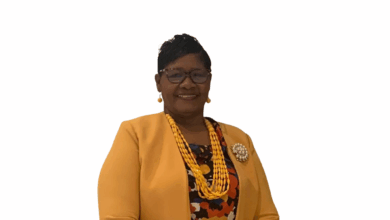
“Crime in the Caribbean can no longer be viewed solely through a law-enforcement lens. It is fundamentally a development issue, a public health issue, and a human security issue.”
– CARICOM’s Assistant Secretary-General for Human and Social Development, Alison Drayton
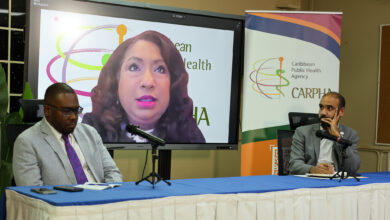
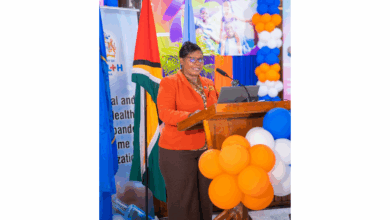
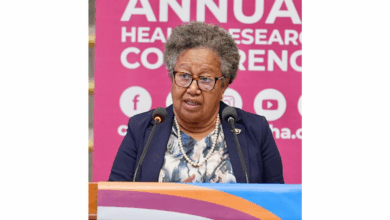
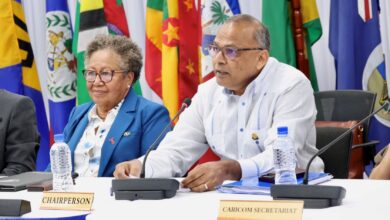
The Caribbean Community (CARICOM) and the United Nations Development Programme (UNDP) today, Thursday 21 May, launched the CARICOM–UNDP Diagnostic Document and Action Framework, marking a decisive step toward addressing crime and insecurity as regional development challenges.
Delivering remarks at the launch, CARICOM’s Assistant Secretary-General for Human and Social Development, Alison Drayton, emphasised that crime in the Caribbean can no longer be viewed solely through a law-enforcement lens. Instead, it must be understood as a development, public health, and human security issue requiring coordinated regional action.
The ASG highlighted the interconnected threats of organised crime, illegal firearms trafficking, gang activity, youth violence, drug transhipment, inequality, and economic vulnerability, noting their impact on public safety, social cohesion, and democratic governance.
She underscored that the new framework translates the political consensus of CARICOM Heads of Government into a region-wide mechanism for evidence-based, strategic action.
The partnership with the UNDP will allow CARICOM to address the drivers of insecurity: poverty, exclusion, and lack of opportunity, through a comprehensive development agenda. This includes strengthening institutions, promoting digital inclusion, and advancing climate resilience.
Ms Drayton commended the Federation of St. Kitts and Nevis, under the guidance of the Hon. Dr Terrance Drew, for leading by example and adopting a public health paradigm that prioritises prevention, community-based interventions, and psychosocial support.
She outlined three clear objectives for the framework: Align: Synchronise national innovations with regional strategy, Implement: Bridge the gap between policy commitments and practical execution and Invest: Prioritise preventive frameworks to guarantee long-term stability.
The ASG affirmed that success will be measured by the ability to foster societies where every citizen, particularly youth, can live with dignity, security, and hope.
Please read her complete remarks below.
REMARKS
MS. ALISON DRAYTON
Assistant Secretary-General, Human and Social Development, CARICOM
Launch of the CARICOM-UNDP Diagnostic Document & Action Framework
Basseterre, St. Kitts and Nevis | 21 May 2026
Salutations
Distinguished Guests,
Good morning. While I regret not being with you in person, I am nonetheless pleased to join you for this important occasion.
Crime in the Caribbean can no longer be viewed solely through a law-enforcement lens. It is fundamentally a development issue, a public health issue, and a human security issue.
Across our Region, organised crime, illegal firearms trafficking, gang activity, youth violence, drug transhipment, inequality, and economic vulnerability continue to erode public safety, weaken social cohesion, undermine democratic governance, and diminish confidence, particularly among our young people. These interconnected threats demand more than isolated national responses. They require coordinated regional action grounded in evidence, solidarity, resilience, and sustainable development.
This launch represents a pivotal transition from shared concern to collective, strategic action. By formalising the CARICOM-UNDP Diagnostic Document and the CARICOM-UN Action Framework, we are translating the political consensus of our Heads of Government into a sophisticated, region-wide mechanism for change.
Our partnership with the UNDP is instrumental in this evolution. It allows us to address the fundamental drivers of insecurity—poverty, social exclusion, and lack of opportunity—with a comprehensive development agenda. This is about more than mitigating threats; it is about fostering institutional strength, digital inclusion, and lasting climate resilience.
We are fortunate to observe the Federation of St. Kitts and Nevis leading by example in this arena. Under Prime Minister Drew’s guidance, the government has championed a public health paradigm that prioritises preventive measures, community-based intervention, and holistic psychosocial support. This approach demonstrates a critical reality: sustainable peace is not merely the absence of violence, but the presence of robust social infrastructure, inclusive development, and renewed trust within our communities.
As we engage in the sessions ahead, our objectives are clear:
• Align: Synchronise national innovations with our broader regional strategy.
• Implement: Bridge the gap between policy commitments and practical, on-the-ground execution.
• Invest: Prioritise the preventive frameworks that guarantee long-term stability.
Our ultimate success will be measured by our ability to foster societies where every citizen—particularly our youth—can live with dignity, security, and genuine hope. I look forward to the insights that will emerge from your deliberations and wish you a highly productive and transformative dialogue.
Thank you.