Monday, 23 March 2026 (CARICOM Secretariat, Turkeyen, Greater Georgetown): CARICOM has underscored the strategic importance of micro-credentials in shaping a more agile, inclusive, and future-ready education and training ecosystem across the Caribbean.
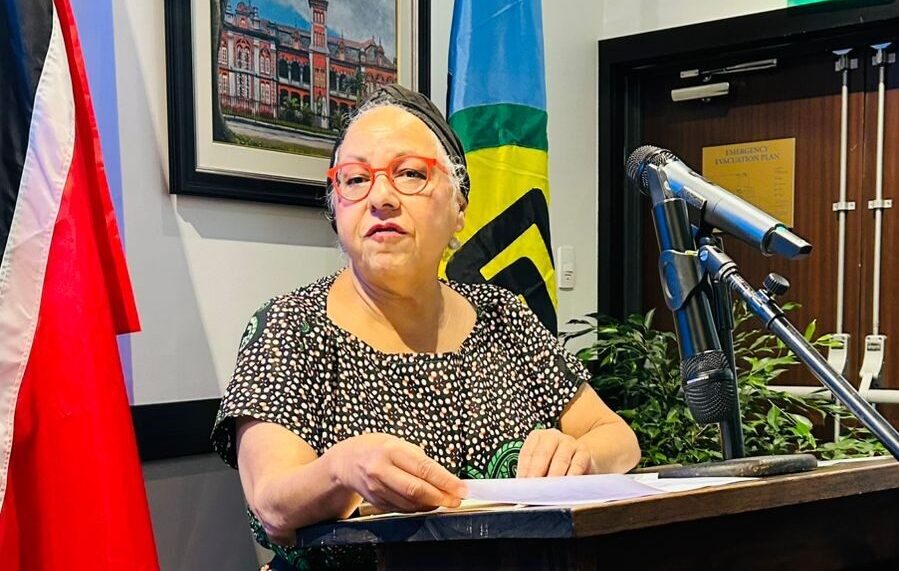
Speaking at the CARICOM–Commonwealth of Learning (COL) Regional Consultation on the Development of a Micro-Credential Sub-Framework on Monday, 23 March, Assistant Secretary-General for Human and Social Development, Ms Alison Drayton expressed appreciation to the Commonwealth of Learning for its partnership and to the Technical Working Group, for its expertise and collaborative spirit in preparing the draft framework.
“Micro-credentials offer us a pathway to rethink how learning is designed, delivered, recognised, and valued. For a Region such as ours, this is not simply an innovation; it is a necessity,” Ms Drayton stated.
Highlighting the Caribbean’s urgent realities of digitalisation, climate vulnerability, and shifting labour markets, she emphasised that micro-credentials can rapidly equip citizens with targeted skills in areas such as climate-smart agriculture, renewable energy, disaster risk management, coastal zone protection, and sustainable tourism.
The Assistant Secretary-General also outlined four critical priorities for the framework. These were Coherence and Quality Assurance, which aim to ensure credibility and trust through alignment with qualification frameworks and robust standards; Portability and Regional Recognition, which enable certificates to carry value across Member States to support labour mobility and competitiveness; Relevance to Labour Market Needs to ensure micro-credentials respond to emerging skills gaps in digital, green, and technical sectors and Inclusion and Access for expanding opportunities for youth, women, working adults, persons with disabilities, and rural communities.
She cautioned against uneven adoption across the Region, stressing the need for a shared approach that balances national priorities with collective goals:
This consultation, therefore, is not merely technical. It is foundational. It is about shaping a shared regional approach, one that balances national priorities with collective goals, and innovation with integrity. It is also about building a new social compact around learning.
The ASG affirmed that the CARICOM Secretariat will continue to lead the process on behalf of the Community, working with partners to ensure that the Micro-Credentials Framework strengthens education and training systems and supports regional resilience and competitiveness.
Representatives from Member States, training institutions, labour market stakeholders, and regional partners attended the two-day dialogue.
-ENDS –