The Twenty-Ninth Meeting of the Council for Foreign and Community Relations (COFCOR) of the Caribbean Community (CARICOM) was held in Paramaribo, Republic of Suriname from 20 to 21 May 2026, under the Chairmanship of His Excellency Melvin Bouva, Minister of Foreign Affairs, International Business and Cooperation of the Republic of Suriname.
The COFCOR was attended by the Honourable E.P. Chet Greene, Minister of Foreign Affairs, Trade and Immigration of Antigua and Barbuda; Senator The Honourable Christopher P. Sinckler, Senior Minister of Foreign Affairs and Foreign Trade of Barbados; the Honourable Dr. Vince Henderson, Minister of Foreign Affairs, International Business, Trade and Energy of the Commonwealth of Dominica (virtual); the Honourable Joseph Andall, Minister for Foreign Affairs, Trade and Export Development of Grenada; Senator the Honourable Kamina Johnson Smith, J.P. Minister of Foreign Affairs and Foreign Trade of Jamaica; the Right Honourable Dr. Denzil Douglas, Minister of Foreign Affairs of the Federation of St. Kitts and Nevis; the Honourable Alva Baptiste, Minister for External Affairs, International Trade, Civil Aviation and Diaspora Affairs of Saint Lucia; the Honourable Dwight Fitzgerald Bramble, Minister of Foreign Affairs, Foreign Trade, Foreign Investment and Diaspora Affairs of St. Vincent and the Grenadines.
H.E. Ambassador Jerusa Ali, Director-General, Ministry of Foreign Affairs, represented the Commonwealth of The Bahamas; H.E. Ambassador Amalia Mai, Chief Executive Officer, Ministry of Foreign Affairs and Foreign Trade, represented Belize (virtual); H.E. Mr. George Talbot, Ambassador to CARICOM, Ministry of Foreign Affairs and International Cooperation, represented the Cooperative Republic of Guyana; Mr. Jean Especa, Director of Economic Relations and Cooperation, Ministry of Foreign Affairs and Worship, represented the Republic of Haiti; and Ms. Candice Shade, Foreign Service Officer V, Ministry of Foreign and CARICOM Affairs, represented the Republic of Trinidad and Tobago.
OPENING REMARKS
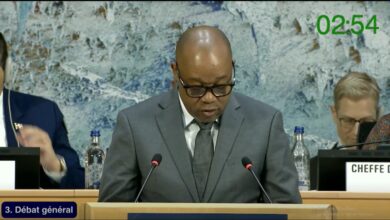
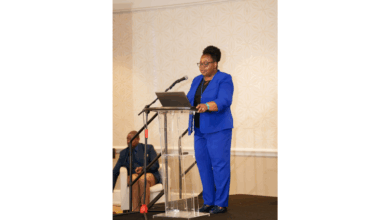
Remarks were delivered by Dr. Carla Barnett, Secretary-General of the Caribbean Community; the Right Honourable Dr. Denzil Douglas, Minister of Foreign Affairs, International Trade, Industry, Commerce and Consumer Affairs, Economic Development and Investment of the Federation of St. Kitts and Nevis and Outgoing Chair of the COFCOR; and His Excellency Melvin Bouva, Minister of Foreign Affairs, International Business and Cooperation of the Republic of Suriname and Chair of the COFCOR. The statements are available at www.caricom.org.
CANDIDATURES
The COFCOR continued to emphasise the importance of CARICOM’s participation in international bodies, including the pursuit of increased CARICOM representation in these organisations. In this regard, Ministers considered and endorsed several CARICOM candidatures proposed for positions within the United Nations (UN) system and its specialised agencies. They agreed to advocate for support, within the GRULAC and wider international community, for Guyana’s bid to host the Thirty-Fifth Conference of the Parties (COP35) to the UN Framework Convention on Climate Change (UNFCCC) in 2030.
Furthermore, Ministers considered requests from Third Countries for CARICOM’s support for their respective candidatures to various international bodies. They also took note of the ongoing selection process for the tenth United Nations Secretary-General for the 2027–2031 term. In this context, the Council emphasized the merit of high-level representation from Latin America and the Caribbean and underscored the importance of ensuring the selection process reflects the diverse leadership available within the region. The Council noted that the final appointment is expected during the 81st Session of the UN General Assembly in late 2026.
BILATERAL RELATIONS
Foreign Ministers acknowledged recent developments in Canada’s foreign policy, which emphasise the evolving role of “middle powers” and the importance of forging new partnerships amid shifting geopolitical dynamics. They underscored the strategic importance of maintaining regular political dialogue with Canada and, in that regard, welcomed the convening of the Fourth Meeting of the CARICOM-Canada Foreign Ministers’ Group in the margins of the 56th Regular Session of the Organization of American States (OAS) General Assembly in Panama City, Panama, from 22-24 June 2026.
The COFCOR discussed the enhancement of CARICOM–Saudi Arabia relations, pursuant to the decisions taken at the Fiftieth Regular Meeting of the Conference of Heads of Government in February 2026. In particular, the Council welcomed the Kingdom’s deepening engagement with the Community and reaffirmed support for the establishment of a CARICOM–Saudi Arabia Joint Collaboration Mechanism, including through the conclusion of a Memorandum of Understanding (MoU).
The COFCOR welcomed the progress in relations between CARICOM and the United Arab Emirates (UAE), further advanced during a Working Lunch with H.E. Omar Shehadeh, Special Envoy of the Minister of Foreign Affairs of the UAE to the Caribbean and Pacific. Foreign Ministers expressed appreciation for the initiatives to enhance the partnership, including through a proposed Comprehensive Economic Partnership Agreement (CEPA) which could significantly expand CARICOM’s market access across the Middle East, Africa, and Asia. The Council underscored the importance of sustained dialogue, reaffirming its commitment to deepening collaboration within the framework of South-South cooperation.
Ministers reviewed the outcomes of the Twelfth UK–Caribbean Forum held on 10 March 2026 and examined mechanisms to operationalize the resulting Action Plan. While acknowledging key initiatives, such as the £1 million archive digitalization project, the COFCOR underscored the need for more robust engagement on reparatory justice, trade barriers, and the UK’s restrictive visa regime. To ensure effective delivery, Ministers called for the regularization of the monitoring meetings between the CARICOM Caucus of High Commissioners in London and the Foreign, Commonwealth and Development Office (FCDO). This structured, technical cooperation allows for the necessary oversight and regional coordination, particularly leading up to the Thirteenth UK-Caribbean Forum which will be held in 2028 in the Caribbean.
The COFCOR noted the update on the significant progress in CARICOM-AU relations, including the outcomes of the Second CARICOM-AU Summit held in Addis Ababa, Ethiopia in September 2025 and the deepened intra-Secretariat cooperation between the CARICOM Secretariat and the African Union Commission (AUC). Highlights included the strengthening of financial cooperation through Afreximbank, noting that Saint Kitts and Nevis will host the next Africa-Caribbean Trade and Investment Forum (ACTIF) in July 2026. Member States were encouraged to utilize this platform to enhance regional connectivity and economic partnership. The Council welcomed the landmark adoption of the UN General Assembly Resolution (A/Res/80/250) adopted on 25 March 2026 recognising the Transatlantic Slave Trade as the gravest crime against humanity. Furthermore, the COFCOR reaffirmed its decision to extend a formal invitation to the Chair of the AU Executive Council to engage with the COFCOR at its Thirtieth Regular Meeting in May2027, with a view to formalizing a high-level consultative mechanism.
MULTILATERAL AND HEMISPHERIC RELATIONS
United Nations
The COFCOR reviewed the implications of the UN80 initiative following a virtual presentation by United Nations Deputy Secretary-General, Ms. Amina J. Mohammed. While acknowledging the importance of modernization, Foreign Ministers expressed concern that a shift toward centralized regional hubs could dilute in-country technical expertise, reduce responsiveness, and marginalize critical priorities such as climate resilience and disaster response. The Council emphasized that reforms must avoid a “one size fits all” approach that fails to account for the unique vulnerabilities of Small Island Developing States (SIDS). It was agreed that any UN recalibration must safeguard local presence, secure predictable financing, and prioritise delivery effectiveness tailored to the specific developmental needs of the Region.
Foreign Ministers received an update from the Chair of the CARICOM Caucus of Permanent Representatives in New York on ongoing Intergovernmental Negotiations (IGN) within the United Nations on Security Council reform. The COFCOR underscored the importance of achieving a reformed Security Council that reflects modern global realities, including the significant increase in UN Member States since the Council’s establishment. In this regard, the Council reiterated its strong support for the allocation of a dedicated seat for Small Island Developing States (SIDS) to ensure that the unique vulnerabilities and security challenges of these nations are represented at the highest level of global decision-making. The Council commended the efforts of CARICOM representatives in the IGN process and reaffirmed its commitment to advancing the Community’s collective position on Security Council reform.
Organization of American States
The Foreign Ministers received an update from the Chair of the CARICOM Caucus of Ambassadors in Washington, D.C., on strategic issues within the Organization of American States (OAS). The COFCOR expressed grave concern regarding the persistent financial and budgetary constraints facing the Organization. Ministers noted with concern the disproportionate impact of limited funding on programmes of priority to the Community and urged a unified, strategic regional approach within the OAS. The Council underscored the necessity of ensuring that the Organization’s budgetary realignment protects mandates critical to the Region’s developmental and security interests.
Association of Caribbean States
The COFCOR noted updates on developments pertaining to the Association of Caribbean States (ACS), which included new partnerships and strategic initiatives aimed at revitalising the Association. Regarding regional efforts to aid in optimising humanitarian activity in Haiti, the COFCOR emphasised the importance of ensuring coordination across regional organisations to provide coherent and efficient support for Haitian-led solutions. Foreign Ministers also noted the upcoming Thirty-First Ordinary Meeting of the ACS Ministerial Council on 21 June 2026 in Panama City, Panama and encouraged the attendance and active participation of CARICOM Member States.
Situation in Cuba
The COFCOR agreed to issue the following statement:
The Caribbean Community (CARICOM) Council for Foreign and Community Relations (COFCOR) expresses its profound concern regarding the ongoing and intensifying economic, commercial, and financial measures imposed upon the Republic of Cuba. The COFCOR reminds that the mounting hardships facing the Cuban people also seriously impact CARICOM nationals studying and living in Cuba, whose well-being remains a priority for the Community.
These measures compound the trade and economic embargo imposed on Cuba for over six decades, which has had a deleterious effect on the lives and livelihoods of the Cuban people.
COFCOR unequivocally affirms Cuba’s sovereign right to import and receive fuel, and condemns the obstruction of energy supplies to Cuba, which has precipitated a grave humanitarian crisis.
COFCOR reaffirms the need for the preservation of the Caribbean as a Zone of Peace and expresses alarm at recent statements that suggest the possibility of military aggression against the Republic of Cuba; any such action would inflict unnecessary human suffering, impose grave material costs, and fundamentally destabilize the security architecture of the entire Caribbean region.
As a matter of international law and in solidarity with the resolutions adopted year after year by the overwhelming majority of United Nations member states, the COFCOR reaffirms that Cuba poses no threat to any nation, that it stands as a peaceful and cooperative member of the international community, and that the continued application of these unilateral coercive measures constitutes an unjustifiable violation of human rights, the principles of free trade, and the fundamental norms governing relations among sovereign states.
The Cooperative Republic of Guyana and The Republic of Trinidad and Tobago reserve their positions on the foregoing Statement.
Situation in Haiti
Foreign Ministers received an update on the political transition in Haiti which commenced on 7 February 2026, following the conclusion of the Transitional Presidential Council’s mandate. The COFCOR welcomed the assumption of executive responsibility by Prime Minister Alix Didier Fils-Aimé and the Council of Ministers, noting their focused efforts to achieve stability and the organising of elections. Positive focus was placed on the process of seeking broad support for the National Pact for Stability from political parties and civil society, as well as the successful registration of political parties in March 2026. Ministers also emphasised the critical importance of the continued engagement of the CARICOM Eminent Persons Group (EPG).
Ministers welcomed updates on the phased arrival of the UN-backed Gang Suppression Force (GSF) and the progress in security training for police and army recruits. They highlighted the importance of recent operations by Haitian security forces to reclaim territory in the capital and in the Artibonite department.
The Council reiterated that restoring security remains a pre-requisite for the General Elections scheduled for 2026. In this respect, the Council calls for the full supplement of the Gang Suppression Force (GSF). Furthermore, Ministers emphasized the urgent need for increased international funding for humanitarian assistance to address acute food insecurity and the mass displacement of over 1.4 million persons.
CARICOM ELECTION OBSERVATION MISSIONS
Underscoring the Community’s mandate to safeguard democracy in the Region, the COFCOR commended the continued work of the CARICOM Election Observation Missions (CEOMs) for their role in promoting transparency, good governance, and the rule of law in accordance with the CARICOM Charter of Civil Society. The Council emphasised the need for sustainable and predictable resourcing for the CEOMs and the renewed commitment from Member States in that regard.
EVOLVING GEOPOLITICAL LANDSCAPE
Ministers also reflected on the impact that the profound shifts in the global landscape is having on the Community, noting that the persistent threats to multilateralism have worsened the vulnerabilities of Small Island and Low-Lying Coastal Developing States. They emphasised that these trends heighten the Community’s exposure to systemic shocks, including the prolonged volatility in global energy markets and persistent inflationary pressures. Ministers asserted that safeguarding Caribbean sovereignty requires a dual approach including intensifying foreign policy coordination for greater convergence to navigate great power rivalries and accelerating the CARICOM Single Market and Economy (CSME) to ensure regional food and energy security. The COFCOR further reaffirmed that unified action and the strategic diversification of international partnerships remain among the Community’s most effective tools for navigating geopolitical uncertainty and advancing the sustainable development of its people.
UPCOMING MEETINGS
Foreign Ministers received an update on upcoming bilateral and multilateral meetings at the Heads of Government and Ministerial levels for the remainder of 2026. The COFCOR emphasized the strategic importance of the Fifth CARICOM-Mexico Summit and the Twenty-Eighth Commonwealth Heads of Government Meeting (CHOGM), to be hosted by Antigua and Barbuda from 1-4 November 2026. The COFCOR also affirmed the importance of the upcoming 81st Session of the United Nations General Assembly to be held in New York in September 2026. The Council agreed that CARICOM should leverage these high-level engagements to strengthen relations with both traditional and non-traditional partners, ensuring that the Region’s priorities are central to the resulting outcomes.
BORDER ISSUES
Belize-Guatemala and Belize-Honduras Disputes
The COFCOR received an update on the Belize-Guatemala and the Belize-Honduras cases before the International Court of Justice (ICJ). The COFCOR also received an update on the situation along the Belize-Guatemala border areas.
The Council acknowledged Belize’s concern about the persistent illegal activities by Guatemalans in western Belize, including growing illegal settlements, that result in the deforestation of Belize’s protected areas and biodiversity loss. The COFCOR also expressed concern about the increased tensions in the Sarstoon and the repeated maritime incursions by the Guatemalan military into Belize’s territorial and internal waters.
The Ministers underscored the obligation of Belize and Guatemala to refrain from any action which could exacerbate the dispute while the case is before the ICJ and reiterated their call for both countries to urgently fulfil their commitment to design a mechanism of cooperation for the Sarstoon River, with the assistance of the OAS.
The COFCOR reiterated its call on Belize, Guatemala and the OAS to respect and fully implement the Confidence Building Measures agreed under their Framework Agreement of 2005, pending a resolution of the case before the ICJ.
The Council commended the OAS for its key role in the Belize-Guatemala process and called on the international community to continue supporting the OAS Office in the Adjacency Zone.
The COFCOR reaffirmed its unwavering support for the sovereignty, territorial integrity, and security of Belize.
Guyana-Venezuela Controversy
Foreign Ministers received an update on the recently concluded oral hearings in the case concerning the Arbitral Award of 3 October 1899 (Guyana v. Venezuela), held before the International Court of Justice (ICJ) from 4 to 11 May 2026, at the Peace Palace in The Hague.
Ministers expressed satisfaction with the participation of Guyana and Venezuela in the proceedings before the Court and underscored the importance of the parties’ respect for international law, the 1966 Geneva Agreement, especially its Article IV 2 that empowered the Secretary General of the United Nations to choose the ICJ as the means of settlement of the controversy, the Charter of the United Nations, and the final and binding character of the Court’s eventual Judgment on the merits.
Ministers reiterated their full support for the judicial process as the proper means of resolving the controversy between Guyana and Venezuela peacefully, finally and in accordance with the Geneva Agreement and international law, and they reaffirmed CARICOM’s firm and unwavering support for the maintenance and preservation of the sovereignty and territorial integrity of Guyana.
ENGAGEMENT WITH REPRESENTATIVES FROM THIRD STATES
During the meeting, the COFCOR welcomed engagement with Ms. Eri Arfiya, Parliamentary Vice Minister for Foreign Affairs of Japan. They expressed high appreciation for the enduring partnership based on the Three Pillars of Japan’s CARICOM Policy. Ministers acknowledged the significant momentum in technical cooperation, specifically in areas of disaster risk reduction, sargassum management, and industrial diversification, while reaffirming the importance of Japan’s support in addressing the unique vulnerabilities of Small Island Developing States (SIDS). The Council further underscored the shared commitment to upholding a free and open international order based on the rule of law and welcomed Japan’s interest in expanding, among others, agribusiness, environment and infrastructure partnerships within the Region.
The Council engaged in a productive dialogue with H.E. Dr. Vivian Balakrishnan, Foreign Minister of Singapore, focusing on the shared systemic vulnerabilities of small states and the necessity of maintaining a robust, rules-based international order. Discussions centred on the advancement of a strategic development partnership to facilitate trade and investment and the exchange of expertise in areas such as digital connectivity and climate-resilient engineering.
Foreign Ministers welcomed opportunities to access skills training and capacity-building programmes to be offered to the Caribbean through the Singapore Cooperation Programme (SCP) and its more recent initiative on Cooperation for Opportunities, Advancement, Sustainability, and Transformation (COAST). Ministers also noted Singapore’s candidacy for Judge of the International Court of Justice for the 2027-2036 term.
APPRECIATION
Foreign Ministers expressed their deep appreciation to the Government and people of the Republic of Suriname for the warm hospitality extended and the excellent arrangements made, which facilitated the successful deliberations of their Twenty-Ninth Meeting. They also expressed anticipation for the Thirtieth Meeting of the COFCOR to be held in May 2027.
Caribbean Community (CARICOM) Secretariat
26 May 2026