CARPHA, as the regional Public Health Agency and the CARICOM health head, has been monitoring the Hantavirus outbreak aboard the international expedition cruise vessel, the Dutch registered MV Hondius, originally reported to the World Health Organization (WHO) on 2 May as a cluster of passengers with severe respiratory illness which departed Argentina on 1 April 2026 on a tour of the South Atlantic.
To date, as of 11 May, nine (9) cases have been identified by the WHO, including both confirmed and suspected infections with three reported deaths. There is also an additional passenger of the ship who had an inconclusive test result, which is being repeated today. Passengers and crew have originated from 28 countries; including Philippines, United States of America, United Kingdom, and The Netherlands. Several individuals disembarked or were medically evacuated to different jurisdictions, prompting international contact tracing across multiple countries.
The WHO alongside Dutch authorities have put the vessel under strict public health protocols following a notification by the International Health Regulation (IHR) focal point for the United Kingdom to WHO of a cluster of respiratory infections on board the vessel on 2nd May 2026. Passengers and crew have undergone monitoring, with some already transferred for care or repatriated to their home countries under controlled conditions. International health authorities continue to coordinate surveillance, contact tracing and risk assessment of exposed individuals.
Hantavirus is not a new disease. It is a well-documented rodent borne viral zoonotic disease, with approximately 20 strains, carried by rodents and present in different parts of the world for decades. These viruses exist naturally in specific rodent populations, which shed the virus in their urine, droppings, and saliva. Hantaviruses are typically rodent borne, transmitted through contact with infected rodents or their excreta.
The current Hantavirus outbreak linked to the MV Hondius cruise ship is caused by the Andes virus, which is the only known strain capable of limited human-to-human transmission. It is found primarily in parts of South America, including Argentina. Based on available evidence, the rodent species that maintains this virus in nature is not present in the Caribbean, and therefore there is no established local source of transmission in our Region.
This rare human-to-human transmission usually requires intimate or prolonged exposure while the incubation period before symptoms appear is usually 1-6 weeks. There is no specific antiviral treatment or vaccine; care is supportive, including oxygen therapy and intensive monitoring. CARPHA advises Member States and the public to remain vigilant but not alarmed.
CARPHA’s Caribbean tailored early warning surveillance and laboratory systems, mechanism and networks is actively monitoring this situation and can detect and respond if needed.
Through close collaboration with regional and international partners, we remain focused on providing proactive communication with its Member States and the public to ensure accurate information sharing, reduce misinformation, and support situational awareness efforts in relation to the outbreak
CARPHA encourages the public to always practice good hygiene, including frequent handwashing, avoiding close contact with people who are unwell, and taking precautions in environments where rodents may be present. These measures are effective not only for hantavirus, but for a wide range of infectious diseases.
CARPHA’s Assessment and Response
CARPHA’s assessment, in alignment with that of international partners – including the WHO, Centers for Disease Control and Prevention (CDC), the United Kingdom Health Services Agency (UKHSA), is that the overall risk to the public and the Caribbean remains low.
Upon notification both by the WHO and CARPHA’s Information Environment Monitoring (IOM) Talkwalker mechanism, CARPHA’s immediate responses were:
- Dissemination of a Watching brief on May 5th
- Coordination with intentional agencies, Chief Medical Officers of Member States (CMOs-MS) technical leads, and regional bodies request for information from the International Health Regulations National Focal Point (IHR NFP).
- Daily monitoring
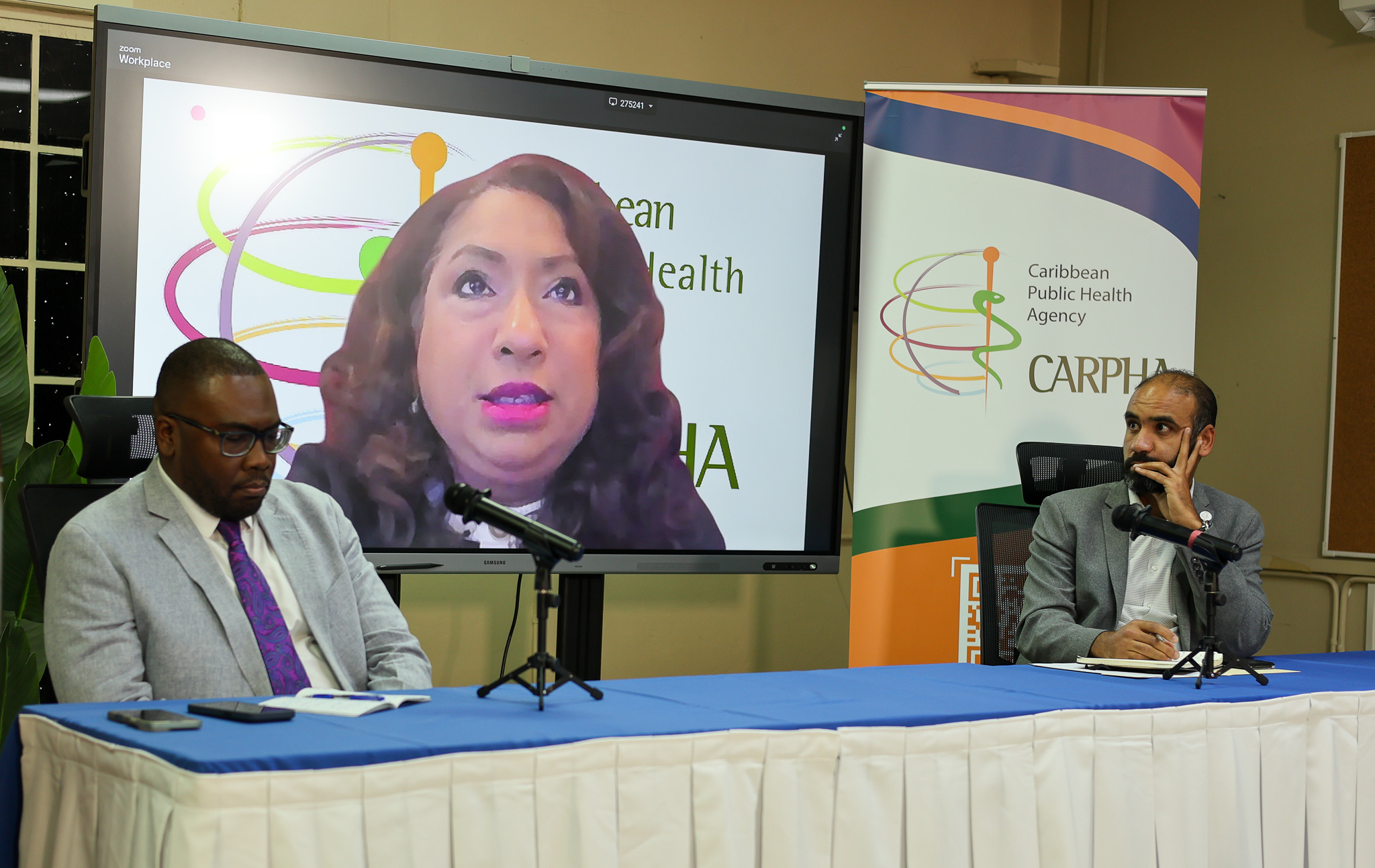
- Meetings with Incident Management Team – Emergency Response (IMT-ER), CMOs meeting, and hosting a briefing for regional media.
The risk is low for the Caribbean public. This is due to the scientific evidence that shows:
- Hantavirus does not spread easily between people.
- The Andes strain linked to this outbreak is unusual in that limited person-to-person transmission has been observed; however, this is rare, requires very close and prolonged contact, and has not been shown to spread widely in communities.
- Primary source is rodents; infection occurs primarily through contact with infected rodents or contaminated environments.
- Does Not spread like COVID-19/influenza
- Short environment lifespan and specific habitat
Hantavirus is NOT COVID-19 because it spreads very differently. COVID-19 spreads globally because it transmits easily between people, including those with mild or no symptoms. In contrast, Hantavirus is primarily rodent-borne, and human-to-human spread is uncommon and limited, and requires close, intimate contact. This fundamental difference means that hantavirus does not have the same potential to cause a global pandemic.
In closing, CARPHA’s reiterates its message that
- Hantavirus is a serious but rare and well-understood disease
- The current risk to the Caribbean is low
- CARPHA’s Caribbean tailored systems are in place to detect and respond to any public health threats
- Global health authorities are actively monitoring and containing the situation, and the risk to the public remains low.
- This outbreak highlights the importance of rapid international coordination, contact tracing, and isolation measures to prevent further spread of rare but potentially deadly viruses.