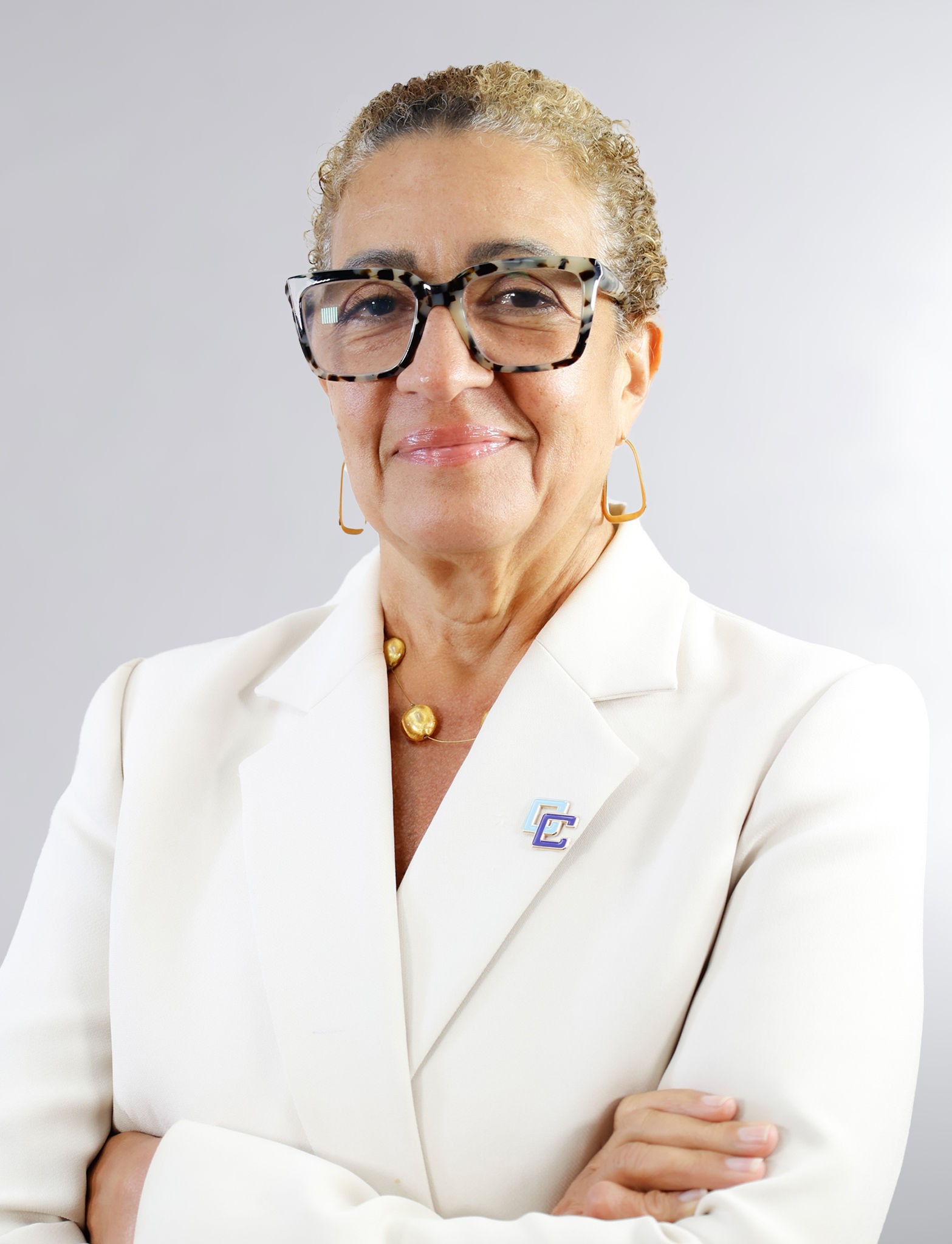
(Caribbean Community (CARICOM) Secretariat, Turkeyen, Greater Georgetown, Guyana) – CARICOM is diversifying its external relations, with a focus on South-South cooperation, to navigate a volatile global environment, Assistant Secretary-General for Foreign and Community Relations at the CARICOM Secretariat, Ms. Elizabeth Solomon, said on Thursday.
She was at the time delivering remarks at the opening of the Centre for International and Border Studies (CIBS) Guyana Conference, “Navigating the Future: Guyana, the Caribbean and Latin America in a Changing Global Environment,” held on 14 May at Herdmanston Lodge Hotel, Georgetown, Guyana.
ASG Solomon said that as CARICOM expands its relations, it is witnessing “a historic deepening” of ties with the African Union and individual African countries, alongside a record number of applications for Associate and Full Membership, which are being considered within a carefully managed strategy for expansion.
She added that strengthening relations with Latin America and the Caribbean remains a priority, noting that these engagements are essential for trade, regional security, and the development of sustainable energy and transport corridors.
The Assistant Secretary-General also said CARICOM recognises that regional stability is contingent on addressing the humanitarian and security crisis in Haiti. In this regard, she added that the Community remains “fully and strategically engaged” with international partners to restore security and democratic governance.
As Guyana prepares to mark its 60th Anniversary of Independence, ASG Solomon reaffirmed CARICOM’s support for its territorial integrity.
“CARICOM remains firm in its support for the judicial process before the International Court of Justice and continues to advocate for a peaceful, legal resolution that respects Guyana’s territorial integrity and maintains our region as a Zone of Peace.”
Please read the full remarks by Assistant Secretary-General for Foreign and Community Relations at the CARICOM Secretariat, Ms. Elizabeth Solomon, below:
OPENING REMARKS
Ms. Elizabeth Solomon, Assistant Secretary-General, Foreign and Community Relations, CARICOM Secretariat at the Centre for International and Border Studies (CIBS) – Guyana | Conference on Navigating the Future: Guyana, The Caribbean, and Latin America in a Changing Environment” | Herdmanston Lodge Hotel | Georgetown | Guyana | 14 May 2026
Professor Mark Kirton, Director of the Centre for International and Border Studies (CIBS) Guyana;
Excellencies of the Diplomatic Corps;
Distinguished Academics, Practitioners, and Professionals;
Members of the Media;
Ladies and Gentlemen.
It is a distinct pleasure to join you for the opening of this Conference. On behalf of the CARICOM Secretariat, I congratulate the Centre for International and Border Studies on its steady evolution since its inception in 2024. Professor Kirton and I go back to our days together at the Institute of International Relations at UWI, St. Augustine. So I particularly want to congratulate him on establishing the CIBS. Clearly retirement was not on the cards! The presence of a research-driven body such as the CIBS in Georgetown provides a valuable platform for the data and analysis required to navigate the current multifaceted global challenges.
The timing of this gathering is particularly significant. As the Cooperative Republic of Guyana – host of the CARICOM Secretariat Headquarters – prepares to commemorate its 60th Anniversary of Independence on 26 May, we are reminded that sovereignty is not a static achievement but a continuous work of diplomacy, intellectual rigor, and national resilience. Within this context, I reiterate the unwavering position of the Community regarding the Guyana-Venezuela border controversy. CARICOM remains firm in its support for the judicial process before the International Court of Justice and continues to advocate for a peaceful, legal resolution that respects Guyana’s territorial integrity and maintains our region as a Zone of Peace. In this regard, we welcome the recent affirmations from Colombia – most notably during the CELAC Summit in Bogotá in March – which underscore the region’s collective duty to reject the threat or use of force and to uphold the Caribbean as a sanctuary of stability and sovereignty.
This Conference comes at a time of unprecedented global volatility. Our hemisphere is navigating geopolitical shifts deeply interconnected with conflicts such as those in the Middle East and Eastern Europe even as we navigate significant policy shifts in this hemisphere. These resulting crises – ranging from supply chain disruptions to energy market fluctuations – test the principles of international law that serve as the primary shield for small states.
To navigate this environment, CARICOM has embarked on a deliberate strategy of diversifying external relations, anchored in the principles of South-South cooperation. We are witnessing a historic deepening of ties with the African Union and individual African countries, as evidenced by our Memorandum of Understanding. The CARICOM-AU Summit last year has contributed to burgeoning cooperation in health and business, and in greater collaboration in pursuing Reparatory Justice. Furthermore, our pursuit of enhanced relations across Asia and the Middle East demonstrates a Community that is proactively broadening its global footprint and seeking mutually beneficial partnerships beyond our traditional spheres of cooperation.
Closer to home, the enhancement of our relationship with our continental neighbours in Latin America and the Caribbean is paramount. As Small Island and Low-Lying Coastal Developing States, this engagement is essential for trade, regional security, and the development of sustainable energy and transport corridors. The region also recognises that stability remains contingent on addressing the multifaceted humanitarian and security crisis in Haiti. The Community remains fully and strategically engaged in coordinating with international partners to restore security and democratic governance in our sister-nation of Haiti. Similarly, even as Member States are faced with making challenging decisions in their bilateral relations with Cuba, collectively CARICOM stands in solidarity with efforts to address the humanitarian situation in Cuba, recognising the urgent need to mitigate shortages and safeguard human dignity.
Central to our collective resilience is the acceleration of the CARICOM Single Market and Economy (CSME) integration, particularly through the Enhanced Cooperation Protocol. At the same time, CARICOM is receiving a record number of applications for Associate or Full Membership, which must be considered within a carefully considered strategy for expansion.
Meanwhile, our survival depends on climate resilience and a robust approach to energy security. To this end, the Community has been focused on increasing renewable energy consumption while simultaneously leveraging the expertise and resources of CARICOM’s hydrocarbon producers. An increase in regional refining capabilities and optimization of our own resources, can ensure the Region becomes the primary beneficiary of its own natural wealth.
Over the next two days, I urge you to be forthright in your discussions. Diplomacy cannot function in a vacuum. Policy is only as strong as the data, research and intellectual rigour that informs it. The Secretariat notes the work of the CIBS, including the research on CARICOM-Africa relations, at a time when we are deepening our engagement with these non-traditional partnerships.
Given the geopolitical significance of this region, the shifting global dynamics puts us in the position to be far more than just observers. As we keep hearing, “if you are not at the table, you are on the menu”. What is required of us is to look to the future and to become the architects of a modern, diversified, and integrated Caribbean.
I wish you a most productive and insightful Conference.
Thank you.