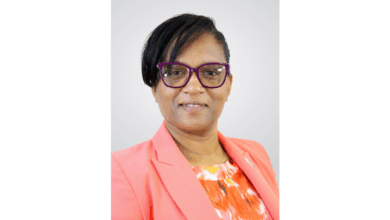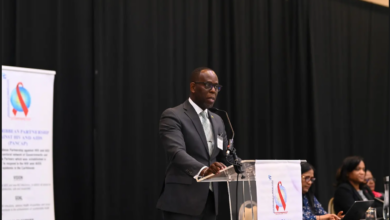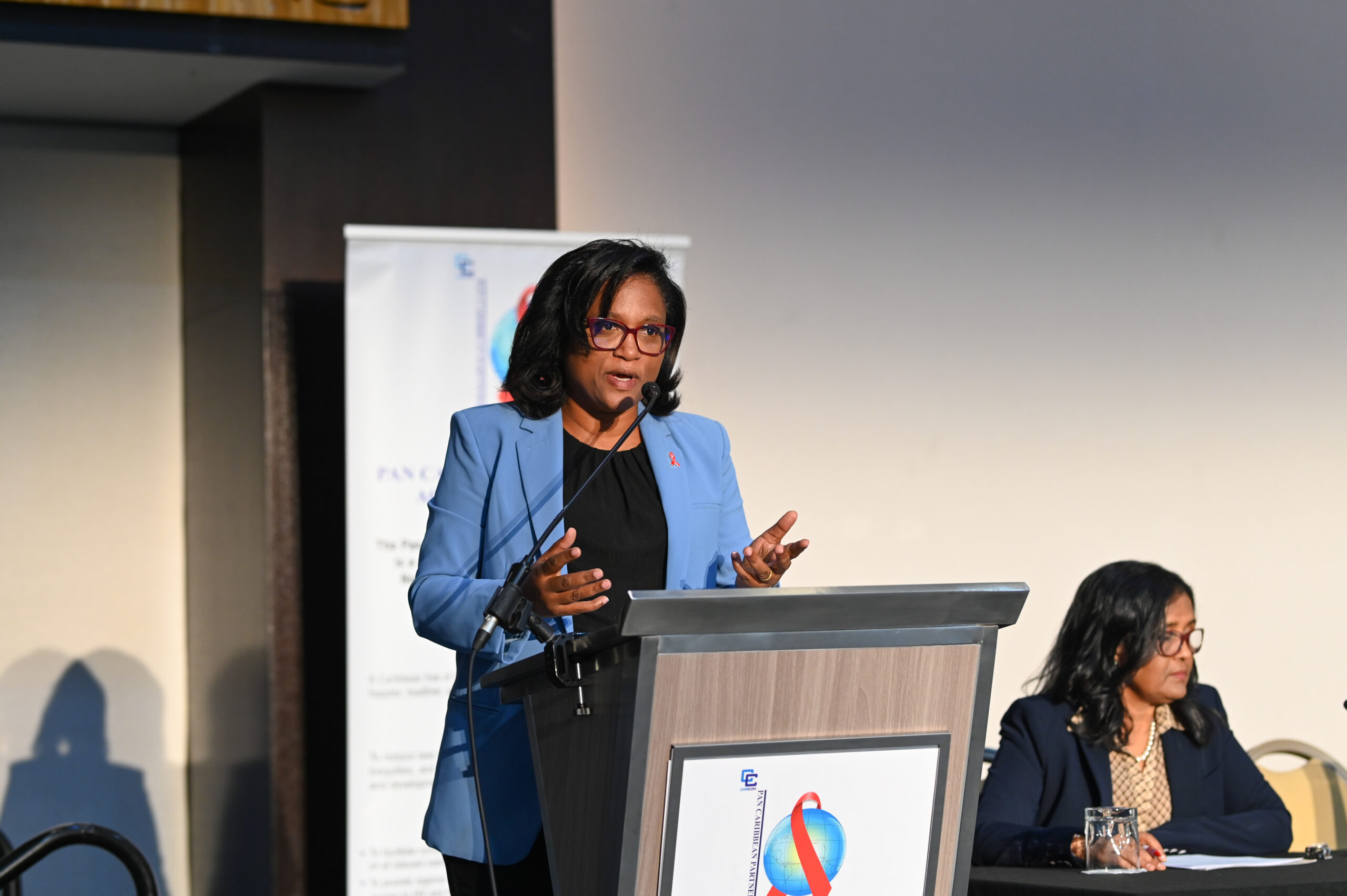
At the Tenth Meeting of National AIDS Programme Managers and Key Partners Opening Ceremony on Wednesday 18 March, Dr Wendy Telgt-Emanuelson, Director of the PANCAP Coordinating Unit, emphasised the importance of this annual gathering in shaping the Caribbean’s HIV response. She noted that while the meeting traditionally reviews progress and challenges, this year’s discussions are especially significant as the Region approaches the 2030 target of ending AIDS as a public health threat.
Dr Telgt-Emanuelson highlighted the final draft of the Caribbean Regional Strategic Framework for HIV and AIDS (2026–2030) as a roadmap for the next phase of the journey. Using the metaphor of a long road trip, she acknowledged both the obstacles and the achievements along the way, underscoring the resilience and innovation of Caribbean partners. She welcomed the presence of Chief Medical Officers and Permanent Secretaries, stressing the value of their perspectives.
In her engagement with participants, she called for continued collaboration among governments, civil society, and international partners, and urged participants to remain focused not only on past achievements but on the collective responsibility to reach the destination: a Caribbean free from HIV as a public health threat.
Please listen to her remarks below:
Remarks
Dr. Wendy Telgt-Emanuelson
Director, PANCAP Coordinating Unit
Tenth Meeting of National AIDS Programme Managers and Key Partners
Port of Spain, Trinidad and Tobago
17–19 March 2026
Salutations.
Good morning.
For many years now, the Meeting of National AIDS Programme Managers and Key Partners has been a regular feature of the Caribbean’s HIV response. Each year we begin in a similar way: a planning committee identifies the key themes, the concept note and agenda are developed, and the meeting brings together programme managers and partners to review progress, reflect on challenges, and identify the way forward.
As usual, our National AIDS Programme Managers met yesterday to discuss specific technical and programmatic issues, which they will report on later today. Today and tomorrow, we meet with partners from across the region to examine the broader response and to set out the next steps together. While we have often spoken about the importance of having Chief Medical Officers and Permanent Secretaries present at this meeting, it has not always been possible. I am therefore delighted that we have them in the room today, as we greatly value and appreciate your perspectives and views.
In many ways, one might expect this meeting to follow the familiar pattern, reviewing achievements, acknowledging challenges, and identifying recommendations for the future.
But this meeting is different.
It comes at a critical moment in our journey toward 2030, the target year for ending AIDS as a public health threat and achieving the global treatment and prevention targets. It also comes at a time when the Caribbean Regional Strategic Framework for HIV and AIDS 2026–2030, now in its final draft, stands ready to guide the region through the final phase of that journey.
Last year, I described the road to 2030 as a journey, a road trip across the Caribbean in your favourite vehicle. Like any long journey, the road has not always been smooth. There have been potholes, and at times the fuel has seemed uncertain. Yet along the way we have also witnessed the beauty of what the Caribbean can achieve when we work together, being innovative, letting go of what does not work, and embracing what does.
And while the journey continues, we remain grateful to those who have stayed on the road with us, our Member States, our Ministers of Health, civil society partners, and institutions such as UNAIDS, PAHO, CARPHA, and the Global Fund, whose continued collaboration and support have strengthened the Caribbean response.
Anyone who has travelled with children knows that during a long road trip one question inevitably comes up: “Are we there yet?”. As drivers, that question can sometimes feel frustrating because the answer often remains the same, not yet.
But eventually the moment comes when the driver can say: “One more stoplight… and we have arrived.”
In our HIV response, many of us, programme managers, policymakers, and community leaders, have at times felt both like the drivers and the children on that journey.
We are the drivers helping to steer the regional response. But we are also the ones asking important questions: When will we reach the point where HIV and AIDS are no longer a public health threat in the Caribbean?
When will people feel confident to say, “I am living with HIV,” without fear of losing friends, employment, or acceptance within their own communities?
And when will all of us, as Caribbean people, fully embrace the responsibility for protecting our health, making informed and responsible choices?
The focus of this meeting, therefore, is not only on what we have achieved, but on how we will get there.
Thank you for the commitment you bring to this work and for the partnership that continues to move our region forward.
I thank you.