
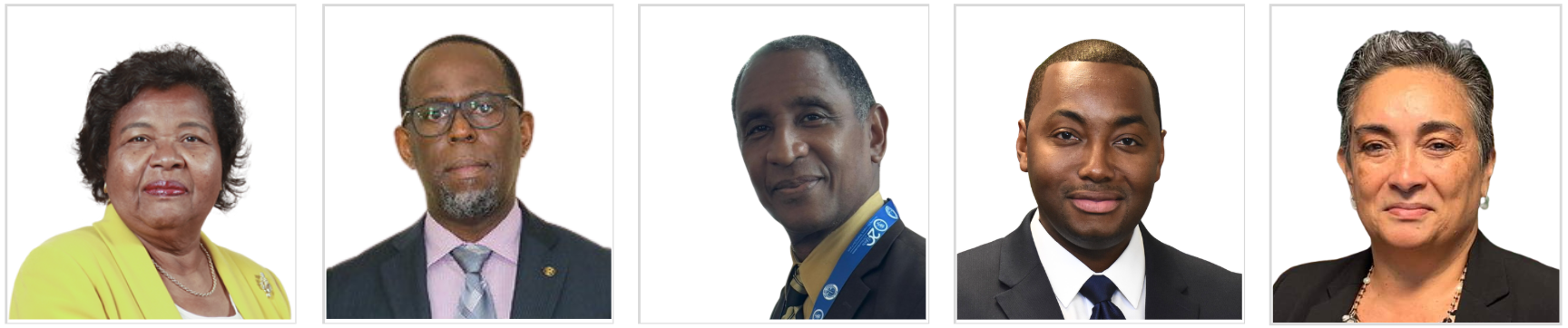
The Caribbean Community Administrative Tribunal (CCAT) this week held the first webinar in a two-part series focused on the settlement of unresolved employment disputes that may arise between institutions of the Caribbean Community (CARICOM) and their respective staff. The webinar, which took place on Monday, 13 April 2026, drew over 100 attendees interested in the operations of CCAT. It also sparked vibrant engagement on the intricacies of dispute resolution in the context of domestic and international law.
CCAT Communications Committee Chair, Dr. Armstrong Alexis, Deputy Secretary-General, CARICOM Secretariat, said that the purpose of the webinars is to engage all regional institutions of CARICOM on the administrative dispute settlement opportunities under CCAT, as well as to grow and strengthen the institution to better serve its beneficiaries.
CCAT Registrar, Mr. Noel Inniss, provided the Overview of CCAT’s Role and Operations. Mr. Inniss said: “CCAT is an impartial and independent judicial body that offers staff members of the CARICOM Secretariat and regional institutions under CCAT’s jurisdiction a forum for the final resolution of employment disputes.” He then outlined CCAT’s governance structure and membership, totaling 20 regional institutions. This webinar was also geared towards sensitizing non-members on how they, too, could seek the approval of CCAT’s plenary to come onboard.
CCAT Judge, Justice Westmin James, provided a comprehensive presentation on the benefits, rights, and responsibilities, as well as eligibility, particularly for institutions that have immunity from litigation within the countries where they operate. He noted that there are several benefits that accrue to staff of those institutions, including access to more rights under international administrative law. He also noted that complaints can be filed anonymously.
Madam Lisa Shoman, General Counsel, CARICOM Secretariat, shared insightful do’s and don’ts for litigants as well as institutions subject to CCAT. She explained that litigants who may be concerned about future employment prospects can opt to use their job titles or their initials in official documents to maintain their anonymity. She stressed the importance of timely and thorough disclosures during the proceedings, as well as due regard for processes and procedures. She indicated that although litigants are permitted to represent themselves, obtaining competent legal counsel is critical to making the most out of the process, including marshalling the evidence needed for successful outcomes.
Webinar attendees made maximum use of the opportunities to pose questions and to participate in the moderated discussion on Enhancing Administrative Dispute Resolution. Madam Shoman suggested that CCAT could be reformed to allow institutions to also be able to recover litigation costs, particularly when frivolous cases are brought against them. She also suggested that institutions should be able to apply to CCAT for advisory opinions. As the rules now stand, only staff of CCAT members can file complaints with the Tribunal. These reforms, if accepted, would require a change in CCAT’s Rules of Procedures.
Madam Dancia Penn, O.B.E, K.C., CCAT Judge, who was one of the judges appointed at CCAT’s inception in 2019, chaired the webinar and moderated the discussion segment. In closing the webinar, she said that she had learned quite a bit from the presenters. “It has been very helpful and a very important step, in my view, towards continuing to build CCAT as an institution and indeed to continue to build and strengthen the institutions within our Caribbean Community,” Madam Penn said.
Details about part 2 of the series will be announced soon. The follow-up session will build on this week’s webinar by delving more deeply into the dynamics of employment dispute resolution at CCAT. The session will explore precedent-setting cases that can strengthen future litigation proceedings as well as help regional institutions to enhance their own internal dispute resolution pathways.

